The dinner-party sentence I can't forget
I was listening to a podcast the other day and a guy told a story that has stuck with me since. He was at a dinner party, and a nutritionist sitting next to him told him one thing: eat the protein first. That was it. No lecture, no plan. Just eat the protein first.
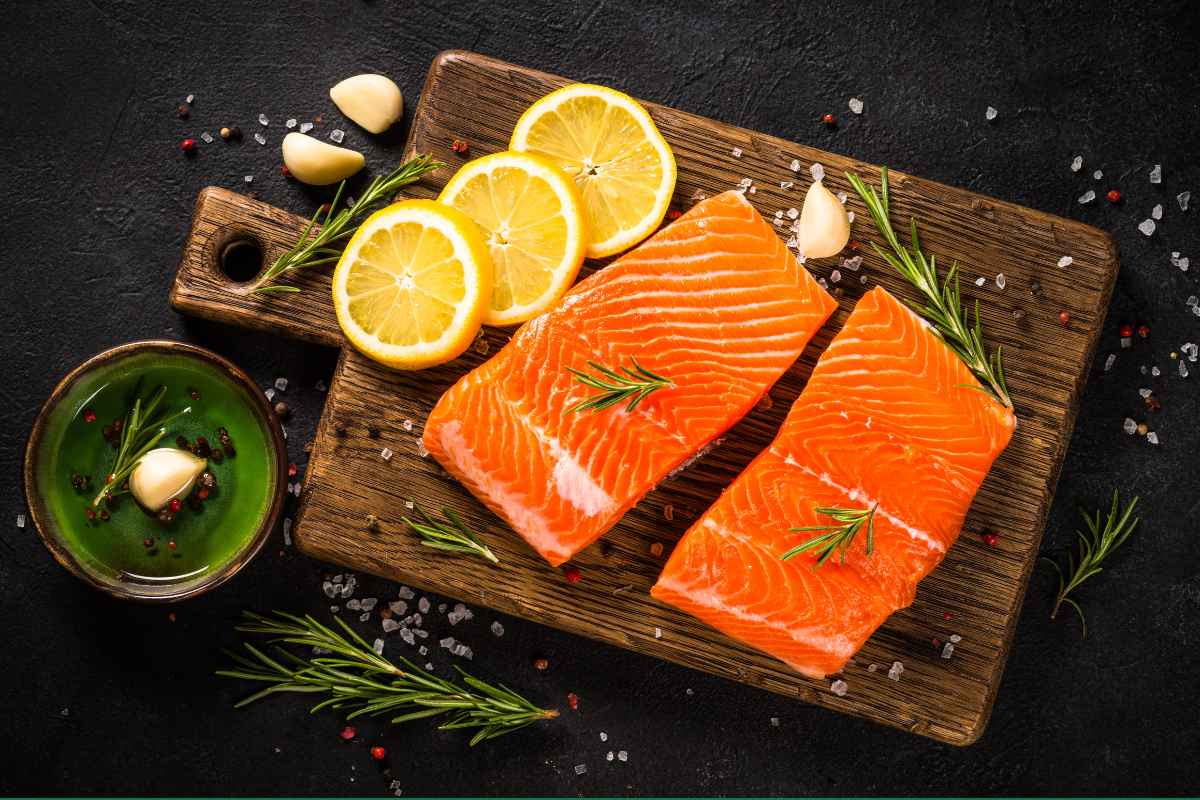
It hit me because I've done the exact opposite my whole life. I'm a saver. I'd clear the potatoes and the bread and leave the salmon or the chicken until the end, like a reward. Turns out that's backwards, and the order genuinely matters, because of how differently your body treats protein compared to a pile of carbs. So I want to walk through why, and I promise it's more interesting than "protein good."
Why 500 calories isn't always 500 calories
Start with the idea that got me thinking about all of this. On a calorie counter, 500 calories of salmon and 500 calories of chocolate look identical. Same number, same little bar filling up. But your body is not a spreadsheet, and those two plates do wildly different things once they're inside you.
The salmon brings protein, which turns down your hunger hormones, holds you for hours, and even burns a chunk of its own calories just being digested. The chocolate brings fast carbs and fat that hit your blood quickly, do almost nothing for fullness, and tend to leave you rooting around for more within the hour. Same calories on paper. Completely different afternoon.
There's a brilliant study that shows this isn't just a feeling. Researchers took the same people and fed them two diets that were matched for calories, sugar, fat, fibre and salt. The only difference was that one was built from ultra-processed food and the other from unprocessed food. When people could eat as much or as little as they liked, they ate about 500 calories a day more on the ultra-processed diet, and they gained weight on it (Hall et al., 2019). Nobody told them to eat more. The food did it to them.
I want to be fair here, because I hate it when nutrition gets preachy. A calorie really is a unit of energy, and for weight, the total still counts. You can't eat unlimited salmon and defy physics. The honest version is this: the number tells you the energy, but the type of food decides how hungry you'll be afterwards and how much you'll eat next. And that second part is usually what makes or breaks a whole day. The old satiety-index work made the same point decades ago, ranking foods by how full they left people for the same calories, and the gaps between foods were huge (Holt et al., 1995).
Eat the protein first: what the studies show
So the nutritionist at that dinner party wasn't just being nice about the fish. Eating protein before your carbs changes the way the meal lands.
A team at Weill Cornell tested exactly this. They gave people with type 2 diabetes the same meal twice, once eating the carbohydrate first and once saving it until after the protein and vegetables. When the carbs came last, the blood sugar spike after the meal dropped by around 30%, and insulin was lower too (Shukla et al., 2015). A follow-up study found the carbohydrate-last order beat sandwiching the food together or eating carbs first, across the hours after eating (Shukla et al., 2017). Same food, same calories, same person. Just a different order on the fork.
One honest caveat, because it matters. That research was done in people with type 2 diabetes and prediabetes, where blood sugar swings are the whole problem. If your blood sugar is healthy, the size of the effect will be smaller. But the reason it works, slowing how fast the meal empties out of your stomach and getting protein in early, helps with fullness for everyone, not just people managing diabetes. It costs nothing to try, and there's no downside, which is my favourite kind of change.
Why your body keeps you eating
Here's the bit that explains the bread basket, and it might be the most useful idea in this whole piece. There's a theory called the protein leverage hypothesis, and it goes like this: your appetite is tuned to hit a protein target, and it will keep you eating until you get there (Simpson & Raubenheimer, 2005). If a meal is low in protein, your body doesn't shrug and stop. It nudges you to eat more of whatever is in front of you until the protein adds up.
Think about the last time you sat down at a restaurant, starving, and there was a big basket of warm bread on the table. You tear through half of it before the meal even arrives, and somehow you're still hungry. That's the leverage effect in action. The bread is carbs and fat with barely any protein, so your body keeps asking for more, because the thing it's actually looking for hasn't turned up yet. Fill up on the low-protein stuff and you overshoot on calories while still chasing the protein you never got.
Flip it, and the trick reveals itself. Get the protein in early and you meet that target sooner, so the background hum of "more, more, more" quietens down before you've demolished the bread. That's why eating the protein first isn't some rigid rule. It's just working with your own biology instead of against it.
Protein speaks the language of your fullness hormones
Underneath the leverage idea is some real hormonal machinery, and this is where it gets interesting for anyone who's been anywhere near weight-loss medication. When protein reaches your gut, it triggers the release of two fullness hormones, GLP-1 and PYY. Those are the same appetite signals that drugs like Mounjaro and Wegovy are built to copy. Protein nudges your own body to make more of them, for free.
The evidence for PYY is neat. In both animals and people, higher-protein meals produced more PYY, and more PYY meant eating less, with the researchers concluding it plays a genuine part in how protein keeps you full (Batterham et al., 2006). It's not the whole story, but it's a real lever, and protein pulls it.
Protein has two more tricks. It costs your body more energy to digest than carbs or fat, sometimes called the thermic effect, so a slice of that 500 calories is spent just processing it (Halton & Hu, 2004). And when people actually eat this way over weeks, not just one lunch, it holds up. In one study, raising protein while letting people eat freely led to a lasting drop in appetite and calorie intake, and steady weight loss, without anyone being told to cut back (Weigle et al., 2005). If you're on a GLP-1 and worried about losing muscle, getting enough protein matters even more, which is a big part of why I bang on about it in the protein powder guide.
How to actually do it
None of this needs a plan or an app to start. It's a handful of small habits that stack up.
Eat the protein first. Literally start the meal with the chicken, fish, eggs, tofu or beans before you touch the potatoes, rice or bread. Vegetables can go alongside the protein. Save the starchy carbs for last.
Handle the bread basket. If there's bread on the table and you're starving, either move it out of arm's reach or have a few bites and then wait for the actual meal. Your hunger is louder before the protein arrives than it will be twenty minutes later.
Anchor every meal with protein. When you build a plate, sort the protein first and let the rest fill in around it. It's the same reason a big salad only really works once there's chicken or salmon on top, which I got into in the big salads piece.
The thing I'd leave you with is that this isn't about willpower, and I'm glad, because willpower runs out. Eating the protein first is a quiet bit of biology you can use every single day, for free, without feeling like you're on a diet. I still catch myself wanting to save the good bit for last. Now I know that's exactly the wrong move.
The questions I get asked
Should I really eat protein before carbs every time?
You don't have to be rigid about it. The pattern that works is protein and vegetables first, starchy carbs last. In people with type 2 diabetes, that order cut the post-meal blood sugar spike by about 30% (Shukla et al., 2015). For everyone else the main win is fullness, so do it when it's easy and don't stress on the days it isn't.
Is a calorie still a calorie, then?
For pure energy, yes. But the type of food decides how full you feel and how much you eat next, and that's usually what actually moves the scale. People given an ultra-processed diet ate around 500 calories a day more than on matched unprocessed food, without trying to (Hall et al., 2019).
How much protein should I aim for?
Targets vary by body size and goal, but most people trying to lose weight while keeping muscle do well around 1.2 to 1.6 grams per kilo of body weight a day. The simpler habit is to make sure protein is on the plate first at every meal, then check where your day actually lands.
Easiest way to see this for yourself is to log a few meals and watch what protein does to your fullness and your day's totals. Healthcount works it out from a plain-English description of what you ate. Start tracking free and put the protein first.
View sources (8)
- Shukla, Iliescu, Thomas & Aronne, Food Order Has a Significant Impact on Postprandial Glucose and Insulin Levels. Diabetes Care, 2015
- Shukla et al., Carbohydrate-last meal pattern lowers postprandial glucose and insulin excursions in type 2 diabetes. BMJ Open Diabetes Research & Care, 2017
- Hall et al., Ultra-Processed Diets Cause Excess Calorie Intake and Weight Gain: An Inpatient Randomized Controlled Trial of Ad Libitum Food Intake. Cell Metabolism, 2019
- Simpson & Raubenheimer, Obesity: the protein leverage hypothesis. Obesity Reviews, 2005
- Batterham et al., Critical role for peptide YY in protein-mediated satiation and body-weight regulation. Cell Metabolism, 2006
- Weigle et al., A high-protein diet induces sustained reductions in appetite, ad libitum caloric intake, and body weight despite compensatory changes in diurnal plasma leptin and ghrelin concentrations. American Journal of Clinical Nutrition, 2005
- Halton & Hu, The effects of high protein diets on thermogenesis, satiety and weight loss: a critical review. Journal of the American College of Nutrition, 2004
- Holt, Brand-Miller, Petocz & Farmakalidis, A satiety index of common foods. European Journal of Clinical Nutrition, 1995