A note before you read
This article is about what carbohydrates and fats do in your body. It has no calorie targets, no weight targets and no list of foods to avoid, and that's deliberate. If you're in recovery from an eating disorder, or you notice food rules getting louder as you read, it's fine to stop and come back another time, or to read it with someone who supports you. If rules around food have started to run your day, please talk to a doctor, or call the helpline for your country at the end of this article. This is information, not treatment.
Carbs or fat. Sooner or later, most diets pick one of them as the villain.
For years it was fat, and supermarket shelves filled up with low-fat everything. Then the story flipped and carbohydrate took the blame: bread, pasta, potatoes, even fruit. If you've lived through both, you may have spent years cutting one and then the other. That's an odd place to end up, because your body uses both every day, for jobs nothing else can do.
This guide goes through what each one does, what happens when you cut either one hard, and what researchers found when they put low-carb and low-fat diets against each other. Some of the evidence is rock solid. Some is a sensible mechanism that hasn't been fully tested. And a few popular claims, on both sides, don't survive a close look.
If you're on a GLP-1 medicine like Wegovy, Mounjaro or Zepbound, there's a section for you too. When your appetite drops, what's on the smaller plate starts to matter more.
The short version
- Your brain, nerves and red blood cells run on glucose. Your body can make some itself, but carbohydrate is the easy supply. Fibre, which is also a carbohydrate, is the part most of us fall short on.
- Fat carries two essential fatty acids your body can't make, and you need some fat in a meal to absorb vitamins A, D, E and K.
- When low-carb and low-fat diets are tested properly against each other, weight loss comes out about the same.
- Cutting either one hard has costs. For carbs, it's mainly fibre and how you feel. For fat, the bigger risk is not eating enough energy overall, which can disrupt periods and harm bones.
- On a GLP-1, smaller meals built around protein, a fibre-rich carbohydrate and a little fat make the most of less food. Build fibre up slowly.
Download the two-page summary (PDF)
What carbs and fat do, and what the trials found. Free, no sign-up.
Illustrative. Shows roles, not amounts.
What carbohydrate and fat do in your body
Carbohydrate
- Glucose for your brain, nerves and red blood cellsSACN (UK), 2015
- Stored as glycogen in your liver and muscles, with waterStatPearls; Kreitzman, 1992
- Fibre keeps your bowel moving and feeds your gut bacteriaSACN (UK), 2015; BDA (UK)
- Backup: your liver can make glucose, and in a long fast your brain can run on ketonesStatPearls; Owen, 1967
Fat
- Two essential fatty acids your body can't makeNHS (UK); Wolff, 2025
- Helps you absorb vitamins A, D, E and K, and carotenoidsBDA (UK); Brown, 2004
- Builds cell membranes. Cholesterol is the raw material for steroid hormones and vitamin DStatPearls
- Triggers fullness hormones and slows stomach emptyingBeglinger, 2004
What carbohydrates do in your body
"Carbohydrate" covers three quite different things: sugars (in fruit, milk and honey), starches (in bread, rice, oats and potatoes) and fibre, the part of plant food you can't digest (SACN, 2015). Most foods that contain one contain a mix.
Your brain's fuel, and where the "130g" comes from
Your brain, nervous system and red blood cells need glucose as fuel (SACN, 2015). The brain on its own gets through approximately 120g of glucose a day (StatPearls: Gluconeogenesis).
You'll also see 130g quoted, often as "the minimum your brain needs". That's the US recommended daily intake for carbohydrate, which the Institute of Medicine based on the amount of glucose the brain needs in a day (National Academies, 2007). The UK doesn't use a gram figure at all. Its Scientific Advisory Committee on Nutrition recommends instead that carbohydrate makes up approximately half of the energy a population eats, on average, which is a different thing from a target for any one person (SACN, 2015).
Now the part the "you must eat carbs" side tends to skip. Carbohydrate isn't essential in the strict sense that some fats and vitamins are. Your liver, and to a lesser extent your kidneys, can make glucose from other things, including glycerol from fat and amino acids from protein, a process called gluconeogenesis (StatPearls: Gluconeogenesis). And if food runs short for long enough, the brain switches to running mostly on ketones, which the liver makes from fat, as a medically supervised starvation study confirmed in the 1960s (Owen et al., 1967).
So yes, the body can get by without eating carbohydrate. That's a backup system for famine, though, and "can get by" is a low bar for how you want to feel on a Tuesday afternoon.
Glycogen, and why the scales jump around
Your body keeps a small store of carbohydrate as glycogen. The liver holds almost 100g and uses it to keep your blood glucose topped up between meals and overnight. Your muscles hold more, around 350g, but keep it for their own use and can't release it into your blood (StatPearls: Metabolism); (StatPearls: Glycogen).
Glycogen is stored with water, roughly three to four parts water to one part glycogen (Kreitzman et al., 1992). That's why the first week of a low-carb diet often brings a quick drop on the scales: a lot of it is glycogen and its water, and it comes back when carbohydrate does. A big pasta dinner can nudge the scales up the next morning for the same reason, as a kilo up after two holidays explains.
Fibre: the carbohydrate most of us fall short on
Fibre is the carbohydrate your small intestine can't break down. It travels on to the large bowel, where it adds bulk, speeds things along and feeds the bacteria that live there (SACN, 2015); (BDA: Fibre).
The evidence here is some of the strongest in nutrition, and it is not country-specific: fibre behaves the same in everybody. The UK's Scientific Advisory Committee on Nutrition found strong evidence from long-term studies that people who eat more fibre, especially cereal fibre and wholegrains, have lower rates of heart disease, type 2 diabetes and bowel cancer (SACN, 2015). A 2019 series of reviews in the Lancet, partly funded by the World Health Organization, pooled 185 long-term studies and 58 trials. People eating the most fibre had 15 to 30% lower rates of death and of several major diseases than people eating the least, with the biggest drop in risk between 25 and 29g a day (Reynolds et al., 2019). Most of that is observational, but the trials point the same way, with lower blood pressure, cholesterol and body weight on more fibre, and the reviewers rated the certainty as moderate.
Countries set the recommendation differently, so the number you have heard depends on where you live. The UK figure for adults is 30g of fibre a day (SACN, 2015). The chart below is UK data: the latest National Diet and Nutrition Survey, covering 2019 to 2023, found UK adults average between 16.4g and 16.9g a day depending on age, and only 4% reach 30g (NDNS, 2025). Wherever you are, the gap is the point rather than the figure.
Published data
The UK fibre gap
Average fibre intake of UK adults, 2019 to 2023
| Age group | Grams a day |
|---|---|
| Adults 19 to 64 | 16.4 |
| Adults 65 to 74 | 16.9 |
| Adults 75 and over | 16.4 |
| UK recommendation for adults | 30 |
| Adults meeting the recommendation | 4% |
You don't need to count it. The number is there to show that nearly all of us have room for more of the foods fibre comes from: wholemeal or granary bread, wholewheat pasta, brown rice, porridge, beans, lentils and chickpeas, vegetables, fruit, nuts and seeds, and potatoes with their skins on (NHS, UK: fibre).
Sugar, GI and the less certain stuff
There's one kind of carbohydrate UK advice does ask most people to have less of: free sugars. That means sugars added to food and drink, plus the sugar in honey, syrups and fruit juice, but not the sugar inside whole fruit or the lactose in milk (SACN, 2015). SACN's reasons: when more energy comes from sugar, people eat more energy overall, and sugary drinks are linked to type 2 diabetes and tooth decay. It's an average for the whole population, not a rule for any single meal or day. (The glycaemic index gets plenty of attention too; the questions at the end explain why the evidence for it is weak.)
And total carbohydrate? SACN found it "appears to be neither detrimental nor beneficial" to heart and metabolic health, and that the idea that higher-carbohydrate diets cause weight gain "is not supported" by the trials it reviewed (SACN, 2015). The kind of carbohydrate tells you far more than the amount.
What fat does in your body
Fat has had a rough few decades, so it's worth being clear about what it's for.
Two fats your body can't make
Two fatty acids are called essential because your body can't make them: linoleic acid, an omega-6, and alpha-linolenic acid, an omega-3 (NHS, UK: Fat); (Wolff et al., 2025). Vegetable oils such as rapeseed, corn and sunflower provide them, and so do walnuts and linseed (flaxseed) oil. The long-chain omega-3s come mainly from oily fish. UK advice is at least two portions of fish a week, one of them oily, such as salmon, sardines, mackerel, trout, herring or pilchards; other countries word it differently but all of them say to eat fish. One detail in that UK advice people often miss: fresh and tinned tuna don't count as oily fish (NHS, UK: Fish and shellfish).
Real deficiency of essential fatty acids is rare. It mostly turns up in people fed through a drip without fat, or whose gut can't absorb fat properly, and occasionally when strict fat restriction meets poor absorption (Wolff et al., 2025); (Estes-Doetsch et al., 2022). A small study of eight women with anorexia found shortfalls in several essential fatty acids in their blood (Holman et al., 1995). So most people needn't worry about it. It is where "the less fat, the better" ends up if you follow it far enough.
The vitamins that need fat to get in
Vitamins A, D, E and K dissolve in fat, and you absorb them with the help of fat eaten at the same time (BDA: Fat); (NHS, UK: Fat). The same goes for carotenoids, the pigments in carrots, tomatoes and spinach. When seven people ate the same salad with fat-free, reduced-fat and full-fat dressing, almost no carotenoids were absorbed with the fat-free one, and absorption rose with the fat (Brown et al., 2004). In another study, vitamin D taken with a meal containing some fat reached a 32% higher peak in the blood than the same dose with a fat-free meal (Dawson-Hughes et al., 2015).
How much vitamin D your skin can make from sunlight depends on how far north or south you live and on the time of year. In the UK almost all of it is made between late March and the end of September, which is why UK advice is that everyone considers a daily 10 microgram supplement through autumn and winter (NHS, UK: Vitamin D). Most countries publish their own version of that advice. Wherever you are, if you take a vitamin D supplement, have it with a meal: that is the bit the research above is about, and it is true everywhere.
Cell walls and hormones
Every cell in your body is wrapped in a membrane built from fats, with cholesterol as part of the structure. Cholesterol is also the raw material your body uses to make steroid hormones, vitamin D and bile acids (StatPearls: Cholesterol). Your body makes cholesterol itself, so this isn't an argument for eating more of it.
Does eating less fat change your hormones? In men, a 2021 review of six small trials found low-fat diets lowered testosterone modestly, and the authors called for more trials (Whittaker and Wu, 2021). A correction to that review was published in 2026, another reason to hold the finding loosely. The evidence on periods is more useful, and it's further down.
Fat and feeling full
When fat reaches your small intestine, it triggers gut hormones including CCK and PYY. CCK slows how fast your stomach empties and helps bring a meal to an end (Beglinger and Degen, 2004), which is part of why a meal with some fat in it feels satisfying.
Calorie for calorie, though, fat isn't the most filling thing you can eat. Protein produces the biggest PYY release (Batterham et al., 2006), and in the well-known satiety index study the foods people found most filling for the same calories were higher in protein, fibre and water, while more fat went with less fullness (Holt et al., 1995). So fat's part in a meal is flavour, satisfaction and getting nutrients absorbed. For fullness, protein and fibre do more of the work, as our look at the satiety research on potatoes explains.
The different fats, and what UK evidence says about saturated fat
| Type of fat | Where it's found (NHS, UK examples) | What the UK evidence says |
|---|---|---|
| Monounsaturated | Olive oil, rapeseed oil and spreads made from them, avocados, almonds, brazils, peanuts | Swapping some saturated fat for unsaturated fat helps lower cholesterol |
| Polyunsaturated: omega-6 | Rapeseed, corn and sunflower oils; walnuts, almonds, cashews | Includes linoleic acid, which is essential. The best-supported replacement for saturated fat |
| Polyunsaturated: omega-3 | Oily fish such as kippers, herring, trout, sardines, salmon, mackerel; linseed oil, rapeseed oil, walnuts | Includes alpha-linolenic acid, which is essential. Oily fish is the richest source of the long-chain forms |
| Saturated | Fatty cuts of meat, sausages and pies, butter, ghee, lard, cheese, cream, ice cream | UK advice is to swap some for unsaturated fat. Most UK adults eat more than the recommendation |
| Trans | Low levels naturally in meat and dairy; partially hydrogenated vegetable oil | Most UK supermarkets have removed partially hydrogenated oil from their own-brand products |
This table describes UK advice and UK intakes, because that is where the sources come from. Table sources: NHS, UK: Fat, NHS, UK: Fish and shellfish, SACN, 2019, NDNS, 2025.
Saturated fat is where the arguments get loudest. In 2019, SACN published its first full review of saturated fat since 1994. It concluded that eating less saturated fat lowers total and LDL cholesterol (and, less helpfully, HDL) and reduces the risk of cardiovascular and heart disease events. It kept the UK recommendation: across the population, saturated fat should average no more than about 10% of our energy, and saturated fats should be swapped for unsaturated ones (SACN, 2019). Most UK adults are above that at the moment (NDNS, 2025).
The Cochrane review of long-term trials lands in the same place. Cutting saturated fat for at least two years reduced combined cardiovascular events by about 17%, and bigger cuts went with bigger benefits. It found little or no effect on deaths from any cause (Hooper et al., 2020). SACN found no significant effect on deaths from heart disease either, and made the fair point that non-fatal heart attacks and strokes still do serious harm (SACN, 2019).
What goes in its place matters, and the best-supported swap is polyunsaturated fat (Hooper et al., 2020); (SACN, 2019). That's also why "just cut fat" is incomplete advice. The questions at the end cover carbohydrate as a replacement, and the claim that some saturated fat is harmless.
Our read: the case for swapping some saturated fat for unsaturated fat is solid. The claims that saturated fat is poison, or that it's secretly harmless, both go further than the evidence.
What happens when you cut carbs hard
"Low-carb" covers a lot of ground, from having a bit less bread to strict ketogenic diets that remove almost all carbohydrate. The harder you cut, the stronger the effects below. The first is the quick early drop on the scales, which, as above, is mostly glycogen and water, not fat (Kreitzman et al., 1992).
Fibre falls, and your gut notices
Fibre is a carbohydrate, so a diet that removes most carbohydrate usually removes most fibre too, unless it's built carefully around vegetables, pulses, nuts and seeds. Fibre is what adds bulk and keeps things moving (SACN, 2015). In a 24-week trial comparing a very low-carbohydrate ketogenic diet with a low-fat diet, minor side effects were more common on the low-carb diet (Yancy et al., 2004).
How you feel
In a year-long Australian trial, a very low-carbohydrate diet and a higher-carbohydrate, low-fat diet produced similar weight loss, but mood improved more on the low-fat diet (Brinkworth et al., 2009). In a much smaller study, women who cut carbohydrate out almost completely did worse on memory tests in the first week, and recovered once carbohydrate came back. They did slightly better on an attention task, though, and with 19 women choosing their own diets, it's a hint rather than proof (D'Anci et al., 2009). You may also have read that carbs lift mood by boosting serotonin. That one is shakier than it sounds, and the questions at the end explain why.
Your body leans on protein
With very little carbohydrate coming in, the body makes more of its glucose from other sources, including protein. In a metabolic ward study where every meal was controlled, switching men to a very low-carbohydrate diet at the same calories coincided with the body using more protein and losing more fat-free mass, while fat loss slowed (Hall et al., 2016). If you're trying to hold on to muscle, that's the opposite of what you want. What cutting carbs does over years, and in sport, is less certain; the questions at the end cover it.
What happens when you cut fat hard
Cutting fat hard causes a different set of problems, and the biggest one isn't the obvious one.
The energy problem
Gram for gram, starchy foods contain fewer than half the calories of fat (NHS, UK: Starchy foods). Flip that round and fat is the most concentrated energy in your diet. So when fat drops close to zero, it can get genuinely hard to eat enough overall, especially if your appetite is already low.
That matters because your body treats a sustained energy shortfall as a threat, and one of the first things it turns down is reproduction. In a careful experiment that set young women's energy intake against their exercise, five days at a time, the hormone pulses that drive the menstrual cycle were disrupted below a certain level (Loucks and Thuma, 2003).
If it goes on, periods can stop. Doctors call this functional hypothalamic amenorrhoea. The Endocrine Society's guideline links it to stress, weight loss and a lot of exercise, alone or in combination, and lists bone loss and infertility among its complications (Gordon et al., 2017). Sports medicine calls the wider picture relative energy deficiency in sport (REDs), and it affects men too (Mountjoy et al., 2023).
So the fair correction to "low fat stops your periods" is this: low energy does it, and cutting fat hard is one of the quickest routes there. (Where the body-fat version of the idea came from is in the questions at the end.) If you've missed three periods in a row, or your periods have become irregular, that is worth seeing a doctor about, whatever your weight (NHS, UK: Missed or late periods). There's more on cycles in your period, your weight and your mood.
Bones
Bone loss is one of the listed complications of periods stopping for these reasons (Gordon et al., 2017). It's one more reason to treat a stopped period as a signal to eat more, and never as a sign that a diet is "working".
Fewer vitamins, less satisfaction
A very low-fat meal also means fewer fat-soluble vitamins and carotenoids absorbed, as the salad study showed (Brown et al., 2004). And meals with almost no fat tend to be less satisfying. If you've read our piece on the all-or-nothing cycle, you'll know where strict food rules tend to lead: a rule breaks, the day feels "ruined", and the restriction starts again. Eating disorder clinicians meet the belief that "all fat is bad" so often that the Centre for Clinical Interventions in Western Australia wrote a patient handout about it (CCI: The Facts on Fat).
Low-carb vs low-fat: what happened when they were tested head to head
If one of these really were the villain, you'd expect it to show up when researchers put the diets against each other. It doesn't.
The biggest single trial is DIETFITS (Gardner et al., 2018). At Stanford, 609 adults were randomly assigned to a healthy low-fat or a healthy low-carbohydrate diet for a year. Both groups got the same advice on quality: eat plenty of vegetables, cut down on added sugar and refined flour, and choose whole, minimally processed food cooked at home. Neither group was given a calorie target. After 12 months the two groups had lost similar amounts, and the small gap between them could easily have been chance. Neither genetics nor how much insulin people produced predicted who would do better on which diet, and within each group, results ranged from big losses to gains.
The Cochrane review pooled 61 randomised trials with 6,925 people. It found low-carb and balanced-carb weight-loss diets probably make little or no difference to weight, blood pressure or LDL cholesterol over one to two years, whether or not people had type 2 diabetes (Naude et al., 2022).
Then there are the metabolic ward studies from Kevin Hall's team at the US National Institutes of Health, where every bite was measured. Swapping carbohydrate for fat at the same calories didn't speed up fat loss. It slowed (Hall et al., 2016). Pooling 32 controlled feeding studies, energy use and fat loss both favoured the lower-fat diets, the reverse of what low-carb theory predicts (Hall and Guo, 2017). And when people could eat as much as they liked, they ate less on a low-fat, plant-based diet than on a ketogenic one, even though the low-fat diet had a far higher glycaemic load (Hall et al., 2021).
NICE, which writes the UK's clinical guidelines, takes the same practical line in its 2025 obesity guideline. It says an energy deficit can come from lowering fat, lowering carbohydrate or other methods, that diets should fit the person (including any history of disordered eating), and that people should be advised against "restrictive diets that are nutritionally unbalanced, because they are ineffective in the long term and can be harmful" (NICE NG246, UK).
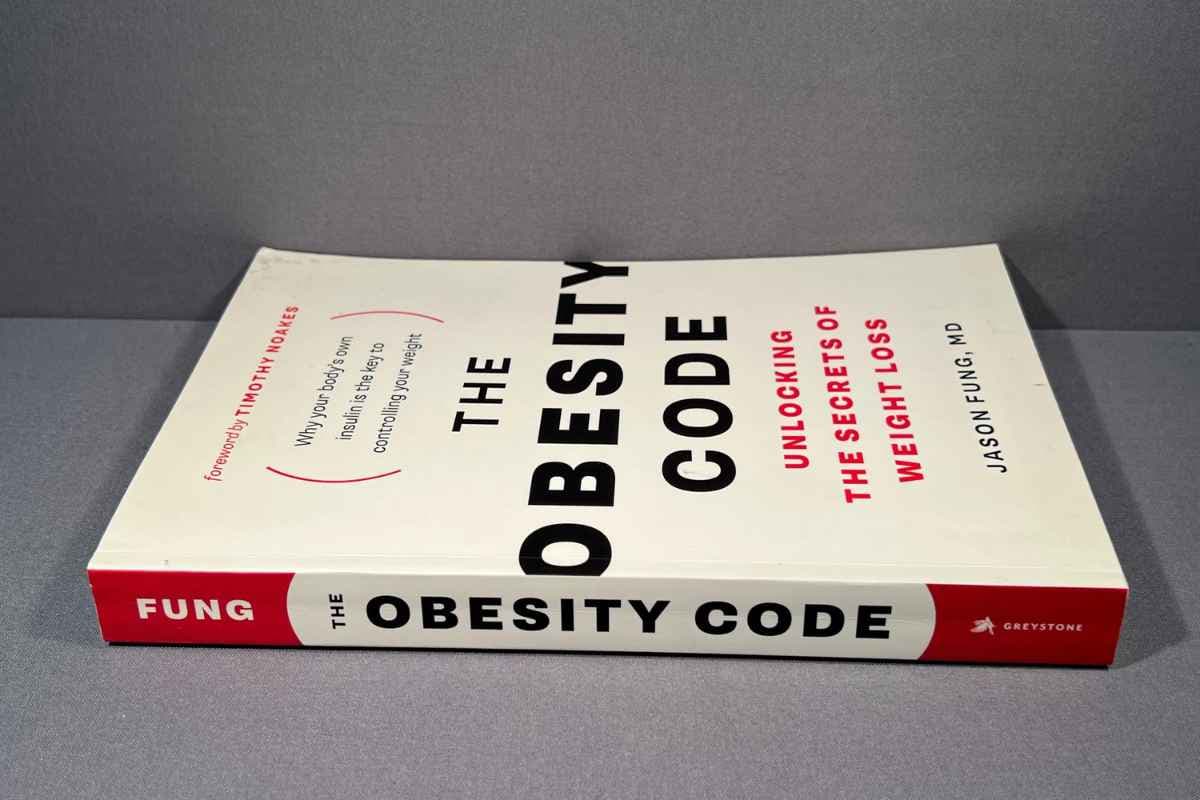
So for weight, carbs versus fat has been tested hard, and it mostly doesn't matter. That's good news, honestly, because it means you can eat in the way that suits you. For the longer story of the insulin theory, see our review of The Obesity Code.
If you're on a GLP-1
GLP-1 medicines turn down hunger. In trials they reduce how much people eat by 16% to 39% compared with placebo (Mozaffarian et al., 2025). In one semaglutide study, people ate 35% less at a lunch where they could have as much as they wanted (Friedrichsen et al., 2021). Another found semaglutide also lowered people's preference for high-fat foods (Blundell et al., 2017).
Less food means less room for gaps. If your plate is a third smaller, each mouthful has to carry more of your protein, fibre, essential fats and vitamins. A 2025 advisory from four US obesity and nutrition societies lists the nutrients most at risk on these medicines, including the fat-soluble vitamins A, D, E and K, along with iron, calcium, magnesium, zinc and vitamins B1, B12 and C (Mozaffarian et al., 2025). A 2026 review led from UCL found that only three of the twelve studies it examined involved a nutrition professional at all, and that proper checks on protein and micronutrient intake were rare (Spreckley et al., 2026).
This is where "cut carbs" or "cut fat" rules can do the most harm. The medicine already takes a lot of food away; a rule that removes a whole food group squeezes the essentials into an even smaller space. No trial has tested that combination, but it follows from the evidence above.
Fibre and constipation
Constipation is one of the most common side effects. The figures below come from the UK product information, because that is the label these numbers were read from; the same trials sit behind the labels in other countries. Constipation affected 24.2% of people on Wegovy injections compared with 11.1% on placebo, and 20.1% of people on Wegovy tablets compared with 9.8% on placebo. For tirzepatide, sold as Mounjaro in the UK and as Zepbound for weight management in the US, it's listed as very common in the weight-management trials, which means 1 in 10 people or more (Wegovy injection, UK SmPC); (Wegovy tablets, UK SmPC); (Mounjaro, UK SmPC).
Published data
Constipation in the UK product information
Share of trial participants reporting constipation, medicine compared with placebo
- Medicine
- Placebo
| Product | Medicine | Placebo |
|---|---|---|
| Wegovy injection (semaglutide 2.4 mg) | 24.2% | 11.1% |
| Wegovy tablets (oral semaglutide) | 20.1% | 9.8% |
| Mounjaro (tirzepatide) | Very common (1 in 10 or more) | No single figure given |
Fibre helps. A 2022 review of 16 trials found fibre supplements improved chronic constipation, with psyllium doing best, and the benefit showing up at higher doses taken for at least four weeks (van der Schoot et al., 2022). None of those trials were in GLP-1 users. The advice on how to add it is the same wherever you read it: increase fibre gradually and drink plenty, because fibre draws water into the bowel and a sudden jump can bring wind and bloating (NHS, UK: Constipation); (BDA: Fibre). If constipation doesn't settle, or you have severe or persistent stomach pain, speak to your prescriber, pharmacist or doctor. For fibre-rich ideas that are gentler on a queasy stomach, see our vegetable tier list.
Fat and nausea: the balancing act
Fat slows stomach emptying, and on a GLP-1 that can make fullness and nausea worse. The joint advisory suggests smaller, more frequent meals and going easy on fatty or very high-fibre foods for the first few days while nausea settles. It also notes that foods high in fat or protein can slow stomach emptying further (Mozaffarian et al., 2025). That's short-term advice for a queasy stomach. Over the longer run you still need fat, and small amounts spread through the day, like a drizzle of oil, a few nuts, some cheese or a portion of oily fish, tend to sit better than one large, rich meal.
Protein, muscle and bone
In the studies in that UCL review, lean tissue accounted for as much as 40% of the weight lost (Spreckley et al., 2026). The joint advisory's answer is enough protein and resistance training (Mozaffarian et al., 2025), both covered in protecting muscle on a GLP-1. Bone matters too. In a Danish trial, people who lost weight with an older GLP-1 medicine (liraglutide) alone lost more hip and spine bone density than people who exercised, while combining the medicine with exercise protected bone (Jensen et al., 2024). As with periods, eating enough is part of looking after your bones.
If you have a history of an eating disorder
A medicine that makes it easy to eat very little can be a risk if you've had an eating disorder. The joint advisory treats a restrictive eating disorder as a general reason not to prescribe these medicines, and recommends screening for eating disorders before starting (Mozaffarian et al., 2025). If that's part of your history, please tell your prescriber, and see the support section below.
What this looks like on a plate
None of this needs a spreadsheet. Most countries publish a plate or a pyramid showing roughly what a day's food looks like. The UK's is the Eatwell Guide, which puts starchy foods at just over a third of what you eat and fruit and vegetables at just over a third, with some dairy or alternatives, some protein foods, and small amounts of unsaturated oils and spreads (Eatwell Guide, NHS, UK). The UK's 2025 obesity guideline points people to it for the long term (NICE NG246, UK). Look up your own country's version and the shape will be familiar.
A few practical ideas, with no numbers to hit:
- Have some carbohydrate at most meals, and lean towards the higher-fibre kinds when you can: wholemeal bread, wholewheat pasta, porridge, brown rice, potatoes with their skins, beans and lentils, fruit and veg.
- Have a little fat with your meals, mostly from oils like olive or rapeseed, nuts, seeds and oily fish. Butter and cheese have a place too: the advice is to swap some saturated fat, not to cut it out.
- Put a little fat with your vegetables, so the carotenoids actually get absorbed.
- If you take vitamin D in autumn and winter, take it with a meal.
- On a GLP-1, build smaller meals around protein, a fibre-rich carbohydrate and a little fat. Increase fibre slowly and drink plenty.
- If a whole food group has quietly disappeared from your week, it's worth asking why.
Download the two-page summary (PDF)
A printable version to keep, with support details. Free, no sign-up.
If food rules are getting louder
If reading this has made you want to cut something out, or you recognised yourself in the sections on cutting hard, you don't have to sort it out on your own.
- Talk to a doctor, who can assess you and point you to treatment (NHS, UK: Eating disorders).
- Call the eating disorder helpline for your country. The one below follows the region you have set at the top of the page, and all four are in the sources at the end.
- If you're on a GLP-1 and have a history of an eating disorder, tell your prescriber.
We've also written about how CBT approaches food rules in CBT for eating disorders, and about why a steady eating pattern helps in why regular eating works.
One last thing, because articles like this usually end with a list of rules and this one hasn't given you any. Your body uses carbohydrate and fat every day. The head-to-head trials don't crown a winner. And most of us have room for more fibre. That's the whole of it.
Questions people ask
Do you have to cut carbs to lose weight?
No. A Cochrane review of 61 trials found low-carb and balanced-carb weight-loss diets made little or no difference to weight over one to two years, and the UK's Scientific Advisory Committee on Nutrition found no trial evidence that higher-carbohydrate diets cause weight gain.
Is fat bad for you?
No. Your body needs two essential fatty acids from food, and fat helps you absorb vitamins A, D, E and K. UK advice is to swap some saturated fat for unsaturated fats such as olive or rapeseed oil, nuts, seeds and oily fish.
How much fibre do adults need?
The UK recommendation is 30g a day for adults, and other countries set the figure differently. The latest UK national survey found adults there average between 16.4g and 16.9g a day depending on age, and only 4% reach 30g. You don't need to count it; it simply shows most of us have room for more wholegrains, beans, lentils, fruit and vegetables.
Should I cut fat or carbs on Mounjaro, Zepbound or Wegovy?
Neither rule is needed. Your appetite is already lower, so the aim is to fit protein, fibre-rich carbohydrate and a little fat into smaller meals. Going easy on very fatty meals can help with nausea for a few days, and building fibre up slowly helps with constipation.
Can cutting fat stop your periods?
Low energy is the main driver. When the energy you eat is too low for what your body is using, the hormones behind the menstrual cycle can be disrupted within days, and cutting fat hard is one of the quickest ways to under-eat. The older idea that periods need a minimum level of body fat goes back to a 1974 paper; later research moved the focus to energy availability, which is why the cycle can be disrupted well before body composition has had time to change. If you've missed three periods in a row or your periods have become irregular, see a doctor, whatever your weight.
Frisch and McArthur, 1974; Loucks and Thuma, 2003; Gordon et al., 2017; NHS (UK): Missed or late periods
Is keto better than low-fat for weight loss?
The head-to-head trials say not. In DIETFITS, healthy low-carb and healthy low-fat diets produced similar weight loss over a year, and metabolic ward studies found no fat-loss advantage for a ketogenic diet at the same calories.
Is a low-carb diet bad for you in the long run?
Nobody knows for sure. A large analysis of cohort studies linked both low and high carbohydrate intakes to higher death rates than moderate intakes, and it depended a lot on what replaced the carbohydrate: animal fat and protein were linked to higher mortality, plant sources to lower. That's observational, so it can't prove cause, and people who eat very differently usually live differently too. Separately, the International Olympic Committee's 2023 consensus on energy deficiency in sport flags growing evidence that low carbohydrate availability plays a part in that problem, alongside low energy overall.
Does the glycaemic index (GI) matter?
Less than its fame suggests. The Lancet reviews of carbohydrate quality rated the evidence linking low-GI diets to better health as low to very low certainty, and the UK's Scientific Advisory Committee on Nutrition pointed out that high- and low-GI diets tend to differ in so many other ways that the studies are hard to read. The evidence for fibre and wholegrains is far stronger.
Do carbs boost serotonin and lift your mood?
Probably not after an ordinary meal. The theory came from lab work showing that a high-carbohydrate, protein-free meal can help tryptophan, serotonin's raw material, get into the brain. But protein making up as little as 2 to 4% of a meal's energy blocks that effect, and a study that measured the fluid around the brain and spinal cord after a carbohydrate breakfast found no change in tryptophan. Carbohydrate and mood may well be linked. This probably isn't the reason.
Doesn't newer research say saturated fat is harmless?
Some researchers argued in 2020 that whole foods matter more than their saturated fat content, and that whole-fat dairy, unprocessed meat and dark chocolate aren't linked to heart disease in the studies available. Whether a food's overall make-up changes the effect of the fat inside it is a real open question. But it hasn't changed UK advice, and it doesn't clear every source of saturated fat: in trials, coconut oil raised LDL cholesterol compared with non-tropical vegetable oils.
Does it matter what replaces saturated fat?
Yes. The strongest evidence is for replacing it with polyunsaturated fat; the evidence for monounsaturated fat is thinner. For carbohydrate it's mixed. The Cochrane review found swapping to carbohydrate looked useful too, while SACN noted that in long-term observational studies, replacing saturated fat with carbohydrate was linked to more heart disease events, and that those studies often didn't say which carbohydrates people ate.
This is general information, not medical advice. If you have a medical condition, are on a GLP-1 or are being treated for an eating disorder, your own clinicians' advice comes first.
View sources (64)
- Scientific Advisory Committee on Nutrition. Carbohydrates and Health. Public Health England, 2015
- Scientific Advisory Committee on Nutrition. Saturated Fats and Health. Public Health England, 2019
- National Diet and Nutrition Survey 2019 to 2023: report. GOV.UK, 2025
- NICE (UK) guideline NG246: Overweight and obesity management (2025, updated 2026)
- NHS (UK): The Eatwell Guide
- NHS (UK): Fat, the facts
- NHS (UK): How to get more fibre into your diet
- NHS (UK): Starchy foods and carbohydrates
- NHS (UK): Fish and shellfish
- NHS (UK): Vitamin D
- NHS (UK): Constipation
- NHS (UK): Missed or late periods
- British Dietetic Association: Fibre food fact sheet
- British Dietetic Association: Fat facts food fact sheet
- NHS (UK): Eating disorders
- Mozaffarian et al. Nutritional priorities to support GLP-1 therapy for obesity: a joint advisory. Obesity, 2025
- Spreckley, Ruggiero and Brown. Nutrition strategies for next-generation incretin therapies: a systematic scoping review. Obesity Reviews, 2026
- Friedrichsen et al. The effect of semaglutide 2.4 mg on energy intake, appetite and gastric emptying. Diabetes, Obesity and Metabolism, 2021
- Blundell et al. Effects of once-weekly semaglutide on appetite, energy intake and food preference. Diabetes, Obesity and Metabolism, 2017
- Wegovy (semaglutide) injection: UK Summary of Product Characteristics, emc
- Wegovy (semaglutide) tablets: UK Summary of Product Characteristics, emc
- Mounjaro (tirzepatide) KwikPen: UK Summary of Product Characteristics, emc
- Jensen et al. Bone health after exercise alone, GLP-1 receptor agonist treatment, or combination treatment. JAMA Network Open, 2024
- van der Schoot et al. The effect of fiber supplementation on chronic constipation in adults. American Journal of Clinical Nutrition, 2022
- Institute of Medicine. Dietary Reference Intakes Research Synthesis: Workshop Summary. National Academies Press, 2007
- StatPearls: Physiology, Gluconeogenesis
- StatPearls: Physiology, Metabolism
- StatPearls: Biochemistry, Glycogen
- Owen et al. Brain metabolism during fasting. Journal of Clinical Investigation, 1967
- Kreitzman et al. Glycogen storage: illusions of easy weight loss. American Journal of Clinical Nutrition, 1992
- Hall et al. Energy expenditure and body composition changes after an isocaloric ketogenic diet. American Journal of Clinical Nutrition, 2016
- Reynolds et al. Carbohydrate quality and human health: a series of systematic reviews and meta-analyses. The Lancet, 2019
- Brinkworth et al. Long-term effects of a very low-carbohydrate diet and a low-fat diet on mood and cognitive function. Archives of Internal Medicine, 2009
- D'Anci et al. Low-carbohydrate weight-loss diets: effects on cognition and mood. Appetite, 2009
- Benton and Donohoe. The effects of nutrients on mood. Public Health Nutrition, 1999
- Teff et al. Acute effect of protein or carbohydrate breakfasts on cerebrospinal fluid monoamine precursors. Journal of Neurochemistry, 1989
- Yancy et al. A low-carbohydrate, ketogenic diet versus a low-fat diet to treat obesity and hyperlipidemia. Annals of Internal Medicine, 2004
- Seidelmann et al. Dietary carbohydrate intake and mortality. The Lancet Public Health, 2018
- Mountjoy et al. 2023 IOC consensus statement on Relative Energy Deficiency in Sport (REDs). British Journal of Sports Medicine, 2023
- Wolff et al. Essential fatty acid deficiency in parenteral nutrition: a narrative review. Nutrition in Clinical Practice, 2025
- Estes-Doetsch et al. Risk factors for essential fatty acid deficiency in nonparenterally fed patients. Nutrition in Clinical Practice, 2022
- Holman et al. Patients with anorexia nervosa demonstrate deficiencies of selected essential fatty acids. Journal of Nutrition, 1995
- Brown et al. Carotenoid bioavailability is higher from salads ingested with full-fat than with fat-reduced salad dressings. American Journal of Clinical Nutrition, 2004
- Dawson-Hughes et al. Dietary fat increases vitamin D-3 absorption. Journal of the Academy of Nutrition and Dietetics, 2015
- StatPearls: Biochemistry, Cholesterol
- Whittaker and Wu. Low-fat diets and testosterone in men: systematic review and meta-analysis. Journal of Steroid Biochemistry and Molecular Biology, 2021
- Beglinger and Degen. Fat in the intestine as a regulator of appetite: role of CCK. Physiology and Behavior, 2004
- Batterham et al. Critical role for peptide YY in protein-mediated satiation. Cell Metabolism, 2006
- Holt et al. A satiety index of common foods. European Journal of Clinical Nutrition, 1995
- Hooper et al. Reduction in saturated fat intake for cardiovascular disease. Cochrane Database of Systematic Reviews, 2020
- Astrup et al. Saturated fats and health: a reassessment and proposal for food-based recommendations. Journal of the American College of Cardiology, 2020
- Neelakantan et al. The effect of coconut oil consumption on cardiovascular risk factors. Circulation, 2020
- Gardner et al. Effect of low-fat vs low-carbohydrate diet on 12-month weight loss: the DIETFITS randomized clinical trial. JAMA, 2018
- Naude et al. Low-carbohydrate versus balanced-carbohydrate diets for reducing weight and cardiovascular risk. Cochrane Database of Systematic Reviews, 2022
- Hall and Guo. Obesity energetics: body weight regulation and the effects of diet composition. Gastroenterology, 2017
- Hall et al. Effect of a plant-based, low-fat diet versus an animal-based, ketogenic diet on ad libitum energy intake. Nature Medicine, 2021
- Loucks and Thuma. Luteinizing hormone pulsatility is disrupted at a threshold of energy availability. Journal of Clinical Endocrinology and Metabolism, 2003
- Gordon et al. Functional hypothalamic amenorrhea: an Endocrine Society clinical practice guideline. Journal of Clinical Endocrinology and Metabolism, 2017
- Frisch and McArthur. Menstrual cycles: fatness as a determinant of minimum weight for height. Science, 1974
- Beat: eating disorder helpline
- ANAD: eating disorder helpline
- Bodywhys: eating disorder helpline
- The Butterfly Foundation: eating disorder helpline
- Centre for Clinical Interventions (Western Australia): The Facts on Fat