Ramadan 2027 is expected to begin on or around 8 February. If you take a weight-loss medicine such as Mounjaro or Wegovy and plan to fast, see your prescriber well before: guidance written for people with diabetes suggests 6 to 8 weeks ahead, which means mid to late December 2026. Any change to your dose, its timing or a pause is their decision, made before Ramadan. Injections under the skin are widely held not to break the fast, but a tablet swallowed in daylight would. Break the fast if you have signs of low blood sugar, dehydration or illness.
A note before you read
This is general information, not medical advice and not a religious ruling. Whether you fast, and anything about your medicine, is for you to decide with your prescriber, and with a scholar you trust for the religious side. Nothing here tells you to change, delay or stop a dose.
If you feel unwell during a fast, break it. Islam exempts people who are ill from fasting.
Ramadan in a UK February means short days of fasting. If you take Mounjaro, Wegovy or another GLP-1 medicine, you may be wondering how the two fit together. These medicines already change how hunger, fullness and digestion work, so a month of eating only at night raises real questions. Will an injection break the fast? What about the tablet? What do you eat at suhoor when you're never hungry? When should you stop?
I've read the guidance so I can tell you what it says and, just as important, where it runs out. The short version: plan with your prescriber in December, look after your fluids, have smaller meals across the night, and break the fast if you feel unwell.
When Ramadan 2027 is, and how long the fasts are
Ramadan 2027 is expected to start on or around 8 February. Moon Sighting UK, using crescent maps from HM Nautical Almanac Office, says it is "most likely to start on 8 February 2027" (Moon Sighting UK, 2026), and the UAE's Astronomy Centre projects the same date (The National, September 2026). Diabetes UK says "on or around Sunday 7 February for 29 or 30 days" (Diabetes UK). The start is confirmed only when the new moon is sighted, so check with your mosque nearer the time.
The days are short. In London on 8 February 2027, the sun rises at about 7.30am and sets at about 5pm; by 8 March it rises at about 6.30am and sets at about 6pm (US Naval Observatory). In Riyadh and Dubai, sunrise to sunset on 8 February is about 11 hours. The fast itself starts at dawn, before sunrise, and BIMA's advice is that "A Ramadan timetable can be obtained from the local mosque" (BIMA, 2026).
What the guidance covers, and what it doesn't
The main medical guidance on fasting in Ramadan comes from the International Diabetes Federation and the DAR International Alliance. Their Practical Guidelines, published in January 2021, are written for people with diabetes (IDF-DAR, 2021). They cover older GLP-1 medicines such as liraglutide, used for diabetes. They don't mention semaglutide, tirzepatide or weight-loss medicines at all.
We found no equivalent guidance for people taking these medicines for weight. A July 2026 article for pharmacists puts it plainly: "Evidence of using GLP-1s for weight management during Ramadan is limited at present" (The Pharmacist, 2026). A letter in a pharmacology journal in March 2026 was titled "Tirzepatide during Ramadan in people with obesity without diabetes: A critical knowledge gap" (Br J Clin Pharmacol, 2026). And when we searched nhs.uk and NHS Inform in October 2026, neither had a page on Ramadan.
So this guide sets out what the diabetes guidance, the medicines' own leaflets and the UK regulator say, and what to ask. The leaflets quoted are the UK ones: if you live in the Gulf, the leaflet in your own pack is the one to follow. This guide can't tell you what's right for you. Your prescriber can.
Before Ramadan: talk to your prescriber in December
The diabetes guidance says a pre-Ramadan assessment should happen, ideally, 6 to 8 weeks before the start of Ramadan, and that at that appointment the healthcare professional "may adjust the dose, timing or the type of medication" (IDF-DAR, 2021, pages 121 and 129). For Ramadan 2027, 6 to 8 weeks before means mid to late December 2026. If your prescriber is an online pharmacy, the same applies: message them early.
What the guidance discusses, so you know what the conversation might cover:
- Dose increases. For the GLP-1 medicines it covers, IDF-DAR says that once the dose has been stepped up properly before Ramadan, at least 2 to 4 weeks before, no further changes are needed during it (IDF-DAR, 2021, page 213). The Pharmacist's article suggests finishing dose increases at least 4 to 6 weeks before, "so that gastrointestinal side effects have time to settle" (The Pharmacist, 2026). When your dose changes is your prescriber's call. The Mounjaro leaflet puts it plainly: "Do not change your dose unless your doctor has told you to" (Mounjaro leaflet, 2026).
- Pausing. "Any pause and restart of GLP-1s should be planned", the same article says, and it warns that restarting at your previous dose after a break "may also bring back stronger side effects" (The Pharmacist, 2026). The leaflets say not to stop without talking to your doctor (Mounjaro leaflet, 2026) (Wegovy tablets leaflet, 2026).
- Other diabetes medicines. If you also take insulin or a sulphonylurea, a type of diabetes tablet, low blood sugar is more likely, and the Mounjaro leaflet says "Your doctor may need to change your dose of these other medicines to reduce this risk" (Mounjaro leaflet, 2026). In the diabetes guidance, some people are advised not to fast at all (IDF-DAR, 2021, page 95).
Questions worth taking to that appointment:
- Is it safe for me to fast this Ramadan, with my medicine and my health as they are?
- If my dose is due to go up, should that happen before Ramadan, and when?
- Does my injection day or time need to change, or is it fine as it is?
- I take Wegovy tablets: how do I fit the empty-stomach rule into the nights?
- I also take insulin or another diabetes medicine: does anything need to change, and what do I do if my blood sugar drops?
- What should make me break the fast, and who do I call?
- If you think I should pause the medicine, how do we plan the pause and the restart?
Does an injection break the fast?
The rulings we found say no. In 1997 the International Islamic Fiqh Academy listed "Subcutaneous, intramuscular, or intravenous injections" among things that "do not invalidate fasting", apart from drips and injections of nutritious fluids (IIFA Resolution 93, 1997). The British Islamic Medical Association's 2026 factsheet, prepared by the Shariah adviser to NHS Muslim spiritual care, also lists subcutaneous injections under what does not break the fast (BIMA, 2026). Weight-loss injections such as Mounjaro and Wegovy go under the skin.
BIMA adds that "There may be differences of opinion amongst the different schools of jurisprudence" and advises people "to refer to scholars of their choosing for their specific cases" (BIMA, 2026). So if you're unsure, ask someone you trust.
The leaflets say you can inject Mounjaro or Wegovy at any time of day, with or without meals (Mounjaro leaflet, 2026) (Wegovy leaflet, 2026). Whether your injection day or time should change for Ramadan is a question for your prescriber, not something to work out alone.
If you take Wegovy tablets
Tablets are different, because you swallow them. BIMA lists oral medication among the things that do break the fast (BIMA, 2026), and The Pharmacist's article notes that a GLP-1 tablet "if taken during fasting hours would break the fast" (The Pharmacist, 2026).
The Wegovy tablet also has strict rules of its own. The leaflet says to take it "on an empty stomach after a recommended fasting period of at least 8 hours", swallowed whole with a sip of water, and then to wait at least 30 minutes before eating, drinking or taking other medicines (Wegovy tablets leaflet, 2026). In Ramadan, eating and drinking happen only at night, so fitting those rules in takes planning. The article for pharmacists says that people for whom the timing is too tight may be better suited to an injection, or to a planned pause, during Ramadan, "but this is an individualised decision" (The Pharmacist, 2026). Make it with your prescriber before Ramadan.
Suhoor with a small appetite
On these medicines, hunger can be so quiet that meals slip by. A joint advisory from four US medical and nutrition societies notes that a limited interest in food and feeling full may lead people "to go several hours without eating", and that nausea "often occurs in the morning or after longer periods without eating" (joint advisory, 2025). A day's fast is a long period without eating, so suhoor matters.
The diabetes guidance suggests you "Take Suhoor as late as possible, especially when fasting for longer than 10 hours", with complex carbohydrates, the slow-release starchy kind (IDF-DAR, 2021, pages 128 and 152). It lists skipping suhoor, or eating it too early, among the habits that cause problems, because for people with diabetes it can mean low blood sugar before iftar (IDF-DAR, 2021, page 149). The Pharmacist's article suggests high-fibre starchy foods such as brown rice, oats or bulgur wheat, pulses, and fruit and vegetables, which "help prevent constipation" (The Pharmacist, 2026).
If you're not hungry before dawn, that's common on these medicines. A little of something you can manage still counts as suhoor. Have something to drink with it.
Iftar: breaking the fast gently
After a day without food, a big meal eaten quickly can sit heavily, especially when your stomach empties slowly. The diabetes guidance says "Iftar should begin with plenty of water" (IDF-DAR, 2021, page 152), and dates are the traditional way to break the fast (The Pharmacist, 2026).
It also describes something that suits a small appetite well: "Some individuals may have a snack (Iftar snack) to break their fast, followed by the Maghrib prayer, and then eat the Iftar meal later in the evening" (IDF-DAR, 2021, page 152). Two smaller meals instead of one large one fits the general advice for nausea on these medicines: smaller, more frequent meals (joint advisory, 2025).
Pace helps too. The guidance lists eating fast among the habits that lead to eating past comfortable, and notes that fullness signals take around 30 minutes to arrive (IDF-DAR, 2021, page 149). Our guide to eating more slowly on a GLP-1 has some ideas. If you feel sick, The Pharmacist's article suggests avoiding spicy, fried or strong-smelling foods and not lying flat after eating (The Pharmacist, 2026).
The guidance treats the movement in taraweeh prayers as part of the day's activity, and suggests avoiding hard exercise in the last hours of the fast, before sunset (IDF-DAR, 2021, page 129).
Drinking enough between iftar and suhoor
This is the part to take most seriously. Some of the commonest side effects of these medicines are nausea, vomiting and diarrhoea, and the MHRA says they "sometimes lead to more serious complications such as severe dehydration, resulting in the need to go to hospital" (MHRA, 2026). The Mounjaro leaflet says "It is important to avoid dehydration by drinking plenty of fluids" (Mounjaro leaflet, 2026), and Wegovy's says the same (Wegovy leaflet, 2026). The Pharmacist's article warns that fasting can amplify the medicines' effects, "increasing the risk of constipation, dehydration and nutritional deficiencies" (The Pharmacist, 2026).
During Ramadan, all of your drinking happens between iftar and suhoor. The diabetes guidance suggests water or unsweetened drinks, spread across the night, and keeping caffeine down, because coffee, tea and cola make you pass more urine (IDF-DAR, 2021, pages 129 and 151). The article for pharmacists suggests aiming for 1.5 to 2 litres of sugar-free fluid (The Pharmacist, 2026). If you have a kidney or heart condition, ask your prescriber what's right for you. And in a hot climate, the guidance notes, dehydration is more of a risk (IDF-DAR, 2021, page 43).
Side effects during a fast
Stomach and gut side effects are more likely "at the start of treatment or after a recent increase in dose" (MHRA, 2024), which is one reason the guidance discusses finishing dose increases before Ramadan. Some people feel dizzy, mainly in the first 3 months of Wegovy (Wegovy leaflet, 2026).
Low blood sugar can happen on some of these medicines even without diabetes. The MHRA lists signs such as "sweating, shaking, feelings of tiredness or weakness and confusion", and says that people who get it "should eat or drink something that will raise their blood sugar quickly, and if symptoms persist they should seek medical attention" (MHRA, 2024). During a fast, that means breaking it.
When to break the fast
Breaking the fast to stay safe is allowed. The guidance quotes the Quran's verse exempting anyone who is ill or travelling from fasting, and says that people who don't fast because of a medical condition "are indeed equally rewarded like those who fast and should not feel guilty" (IDF-DAR, 2021, page 103). Missed days can be made up later, or replaced by fidya, giving food or money to people in need (IDF-DAR, 2021, page 124).
Stop fasting and drink, or eat something, if you have:
- signs of low blood sugar: sweating, shaking, weakness, tiredness or confusion
- signs of dehydration: feeling very thirsty, going to the toilet less often, a dry mouth, lips or skin (DAR leaflet), or feeling dizzy when you stand up
- vomiting, diarrhoea, a fever, exhaustion or any other illness
- if you have diabetes and check your blood sugar: a reading below 3.9 mmol/L, or above 16.6 mmol/L. The guidance also suggests re-checking within an hour if it's between 3.9 and 5.0 (IDF-DAR, 2021, page 130)
That list comes from the diabetes guidance, which says to break the fast for "Symptoms of hypoglycaemia, hyperglycaemia, dehydration or acute illness", such as fever, diarrhoea, vomiting or exhaustion (IDF-DAR, 2021, pages 107 and 130), from the MHRA's signs of low blood sugar (MHRA, 2024), and from The Pharmacist's article, which calls a vomiting bug or fever "itself a reason to advise breaking the fast" (The Pharmacist, 2026). Diabetes UK and BIMA put it simply: "If you become dehydrated, end your fast immediately and drink some water" (Diabetes UK and BIMA).
If food has been hard for you
For some people, a month of fasting brings up old patterns with food. Writing about intermittent fasting rather than Ramadan, the article for pharmacists says it isn't appropriate for people with a history of disordered eating, "since restrictive patterns can worsen their relationship with food" (The Pharmacist, 2026). Ramadan is a religious practice, not a diet, but the long gaps without food can still stir things up.
If you have, or have had, an eating disorder, talk to your care team before Ramadan, and remember that being unwell is a recognised reason not to fast. You won't be the first to make that choice.
How a food journal helps in Ramadan
A month of nights-only eating is exactly when memory gets unreliable. Writing a line or two each day shows you patterns you'd otherwise miss: whether the days you skipped suhoor were the days you felt sick, whether a heavy iftar meant a bad night, how much you managed to drink, and how the day after a dose went. It also gives you something real to take to your prescriber after Ramadan, instead of trying to remember the first week.
Things worth noting each day:
- what you had at suhoor and iftar, in your own words
- what you drank between iftar and suhoor
- any nausea, dizziness or other side effects, and when they came
- days you broke the fast early, and why
- questions for your prescriber
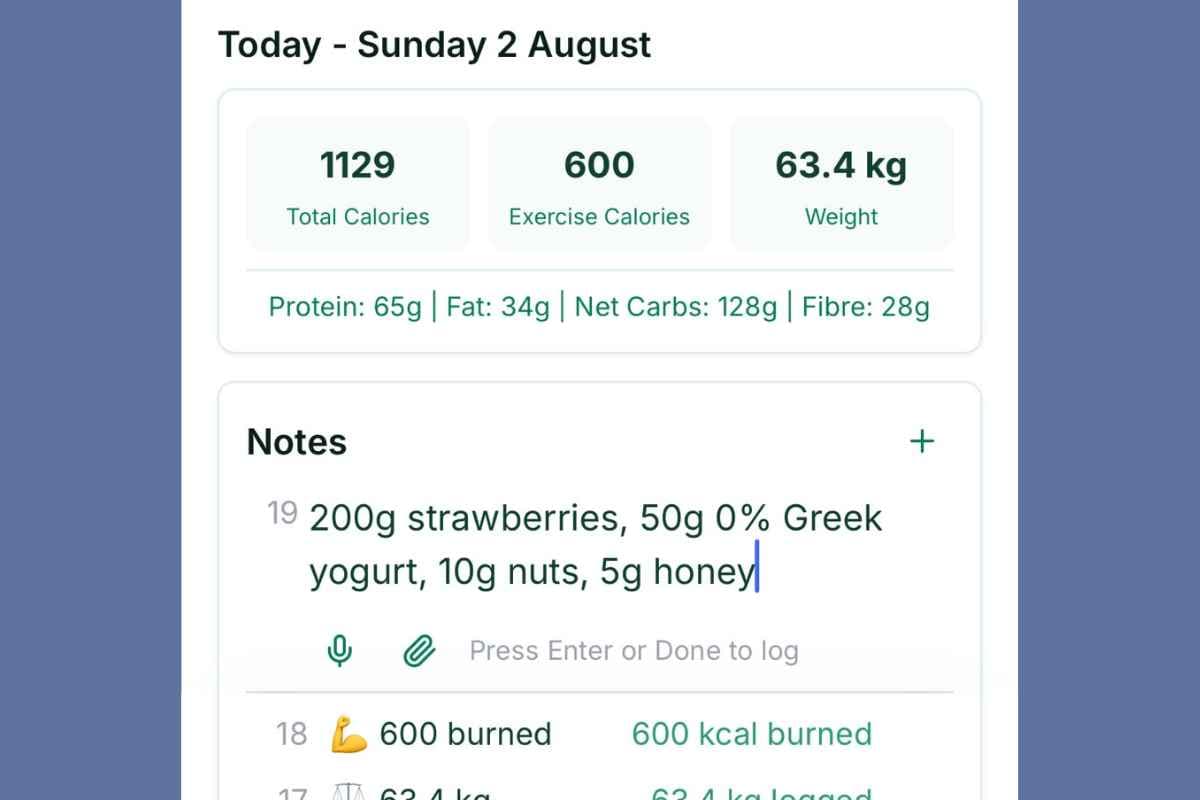
If you want somewhere to keep it, Healthcount is a free food journal: you write in your own words, and the numbers are optional. A notebook works just as well. One practical point: if you use meal reminders in any app, including ours, check they won't go off during the fast.
After Ramadan
Ramadan 2027 is expected to end around 8 or 9 March, with Eid al-Fitr after it (The National, September 2026). If anything about your medicine changed for Ramadan, going back to your usual routine is part of the same plan with your prescriber, and restarting after a break can bring side effects back (The Pharmacist, 2026). And bring your notes.
Questions people ask
When does Ramadan 2027 start?
It is expected to begin on or around 8 February 2027 and to last 29 or 30 days. The exact date depends on the sighting of the new moon, so check with your mosque nearer the time.
Can I fast during Ramadan on Mounjaro or Wegovy?
There is no Ramadan guidance written for people taking these medicines for weight, and the evidence is limited. Whether it's safe for you is a question for your prescriber, ideally 6 to 8 weeks before Ramadan, which for 2027 means mid to late December 2026.
Does a weight-loss injection break the fast?
The International Islamic Fiqh Academy ruled in 1997 that injections under the skin do not invalidate the fast, and the British Islamic Medical Association says the same. A tablet swallowed during fasting hours would break it. Schools of thought differ, so ask a scholar you trust about your own situation.
Should I change my dose or injection day for Ramadan?
That's for your prescriber to decide, before Ramadan, not during it. The guidance discusses finishing dose increases some weeks before Ramadan so side effects can settle, and any pause and restart should be planned. Don't change or stop your medicine on your own.
What should I eat at suhoor and iftar on a GLP-1?
Diabetes guidance suggests eating suhoor as late as you can, with slow-release starchy foods, and starting iftar with plenty of water. With a small appetite, a little at suhoor and a small iftar, followed by a later meal if you want one, may sit better than one large meal.
When should I break the fast?
If you feel unwell. That includes signs of low blood sugar such as sweating, shaking, weakness or confusion, signs of dehydration such as feeling very thirsty, passing little urine or feeling dizzy when you stand, and vomiting, diarrhoea or a fever. Islam exempts people who are ill from fasting.
General information, not medical advice and not a religious ruling. Decisions about fasting and your medicine belong with you, your prescriber and, for religious questions, a scholar you trust.
View sources (22)
- Diabetes and Ramadan: Practical Guidelines 2021, International Diabetes Federation (IDF) in collaboration with the DAR International Alliance, January 2021 (PDF linked from this page)
- Ramadan and Diabetes: Guide to a safe fast, DAR International Alliance, patient leaflet (PDF, 2020)
- Carvalho A. Fasting and weight-loss medications: what to advise your patients. The Pharmacist, 29 July 2026
- GLP-1 medicines for weight loss and diabetes: what you need to know, MHRA, GOV.UK (updated 5 February 2026)
- MHRA reminds healthcare professionals to advise patients of the side effects of GLP-1 agonists, MHRA press release, 24 October 2024
- GLP-1 receptor agonists: reminder of the potential side effects and to be aware of the potential for misuse, MHRA Drug Safety Update, 24 October 2024
- Mounjaro KwikPen: package leaflet, Eli Lilly, last revised August 2026, emc
- Wegovy FlexTouch: package leaflet, Novo Nordisk, last revised 08/2026, emc
- Wegovy tablets: package leaflet, Novo Nordisk, last revised 06/2026, emc
- Resolution No. 93 (1/10): Invalidators of fasting in medical treatments, International Islamic Fiqh Academy, 1997
- Ramadan Health Factsheet 2026/1447 AH, British Islamic Medical Association (BIMA), 29 January 2026
- Diabetes and Ramadan, Diabetes UK (no page date; read 25 October 2026)
- Ramadan and diabetes, Diabetes UK leaflet with BIMA, last reviewed December 2023
- Observation report for Ramadan 1448 AH, Moon Sighting UK, with crescent maps from HMNAO, updated 7 April 2026
- Ramadan 2027: projected dates from the UAE's Astronomy Centre, The National, 9 September 2026
- Sun and moon data for one day (London, Riyadh, Dubai, 8 February and 8 March 2027), US Naval Observatory
- Mozaffarian et al. Nutritional priorities to support GLP-1 therapy for obesity: a joint advisory from four US medical and nutrition societies. Obesity Pillars, 3 June 2025
- Tirzepatide during Ramadan in people with obesity without diabetes: a critical knowledge gap. British Journal of Clinical Pharmacology, 27 March 2026 (letter)
- Beat (UK): helplines
- ANAD (US): eating disorder helpline
- Bodywhys (Ireland): helpline
- Butterfly Foundation (Australia): National Helpline