The short answer
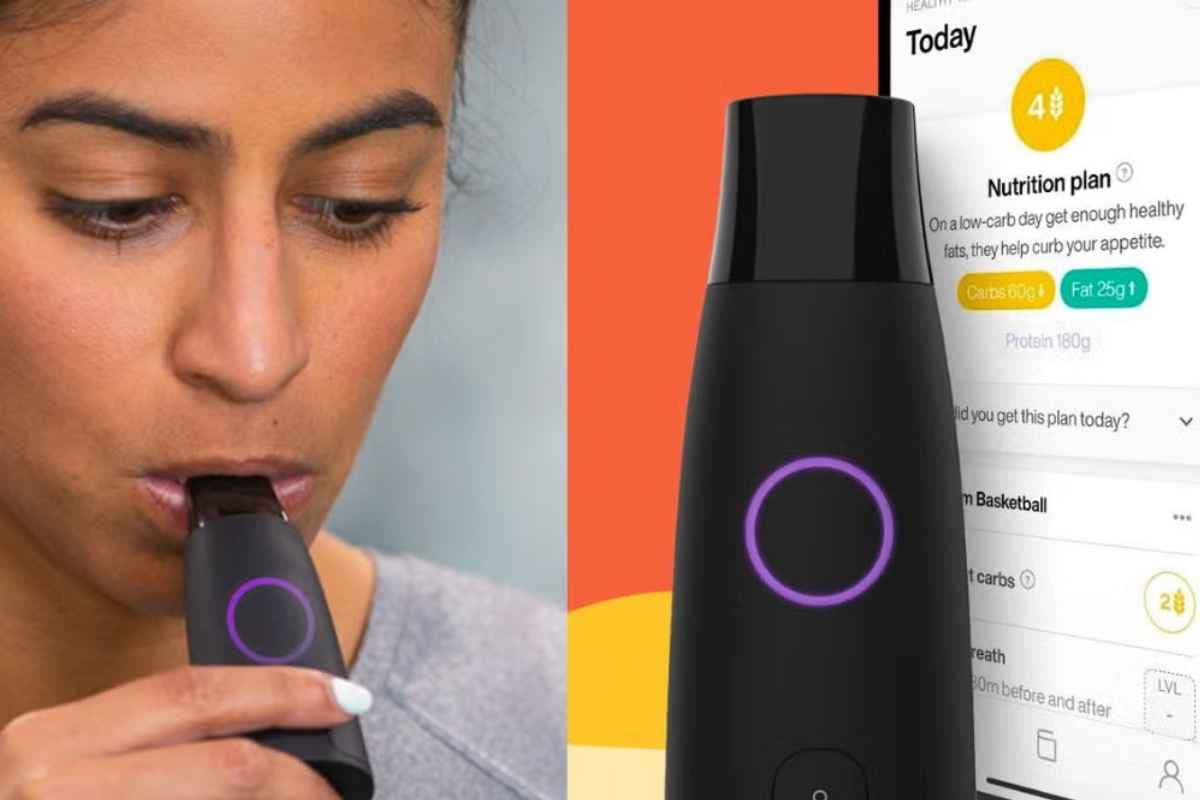
You've probably seen the ads. A little white device, you breathe into it for half a minute in the morning, and it tells you what your metabolism is doing. The implied promise is the dream: no more weighing, no more logging, just breathe and know.
So here's the honest answer up front, because I don't think you should have to read 2,000 words to get it. A breath device measures which fuel your body is burning right now. It cannot measure how much you ate. Those are completely different questions, and only one of them decides whether you lose weight. No amount of breathing into a tube can tell a machine that you had a flapjack at eleven.
The clearest evidence for that is Lumen's own app, which includes a food logger with a calorie and macro database. If a breath reading were enough, the company wouldn't ask you to log your food in the same app. Their actual pitch is "log your food andbreathe," which is a very different product from the one in the advert.
That said, this isn't a hit piece. The underlying science is real, the company is serious, and there are people it genuinely suits. Let me explain what it does, then you can decide.
How breathing into a tube tells you anything
The principle is called indirect calorimetry, and it's properly established science. When your body burns fuel it uses oxygen and produces carbon dioxide, and the ratio between those two gases shifts depending on what you're burning. Burn mostly carbohydrate and you produce relatively more carbon dioxide. Burn mostly fat and you produce relatively less. Measure the ratio and you can tell which fuel is dominant.
Hospitals and sports labs do this with a metabolic cart, a large piece of kit that measures both oxygen and carbon dioxide precisely. Lumen is a shrunk-down version, and this is the important bit: it has a carbon dioxide sensor and a flow meter, but it does not measure oxygen at all (Lorenz et al., 2021). It estimates the percentage of carbon dioxide in one guided breath and infers your fuel mix from that, then packages it into a score with some diet suggestions attached.
The three numbers people mix up
Almost all the confusion around these devices comes from blurring three separate things. Worth separating them clearly.
Calories in. How much you ate. This is the number that drives weight change, and a breath device has no access to it whatsoever. It cannot see your food.
Fuel type.Whether you're burning mostly fat or mostly carbs at this moment. This is what Lumen estimates. It's interesting, and it responds to things like fasting or a big pasta dinner. It is not the same as burning moreenergy, and a "fat burning" reading doesn't mean you're losing fat. You can be burning fat as a fuel and still gaining weight, if you're eating more than you use.
Calories out.How much energy you're expending. Measuring this properly needs oxygen data, which Lumen doesn't collect, so it isn't measuring your metabolic rate either, despite how the marketing reads.
As one review of the device put it, indirect calorimetry measures what your body is consuming, but it is powerless to tell you what your body requires (Science-Based Medicine). Weight change comes down to energy in against energy out. A breath device sits to the side of that equation rather than inside it.
How good is the evidence?
The principle is sound. The question is whether this particular gadget measures it well, and here I'd want you to know the details before spending a few hundred pounds.
The main validation study compared Lumen against a proper laboratory metabolic cart (Lorenz et al., 2021). The good news: readings moved in the right direction when people drank glucose, so the device does detect a genuine shift. The caveats are substantial, and all of them come from the paper itself:
It tested 33 healthy young adults with an average age of 23, all without metabolic disease. That is not the population buying it. The agreement with the lab was weak: the laboratory measure explained only about 23% of the variancein Lumen's readings. That supports "this can spot a big directional change" and does not support "this gives you an accurate number to act on each morning." And the study was funded by the manufacturer, with two of the authors employed by the company and a co-founder among them. That doesn't make it wrong, but it's context you deserve.
There's also no published evidence that using one makes people lose more weight, which is ultimately the claim that matters. And the device's own terms exclude people with diabetes, metabolic disorders or lung disease, which is a striking carve-out given who might be most curious about their metabolism.
The honest pros and cons
What's genuinely good about it.The science underneath is real, not pseudoscience. It takes about thirty seconds and requires no blood or lab visit. It can show you real, responsive changes, such as the difference between a fasted morning and the morning after a big carb-heavy dinner, and seeing that can make an abstract idea feel concrete. Plenty of people find that motivating, and motivation isn't nothing. The company is well funded and the app ratings are good.
What isn't.It can't measure what you ate or what you burned, so it doesn't answer the question most buyers actually have. The validation is thin and manufacturer-funded. Most of the useful features sit behind a subscription. Reviews consistently mention a learning curve on the breathing technique, a warm-up wait before each reading, and app bugginess. And there's a subtler risk: chasing a "fat burning" score can quietly pull your attention away from the thing that actually moves your weight, which is how much you're eating overall.
What it costs
The device is usually around 199 to 299 US dollars, often discounted and bundled with a few months of membership. After that the membership runs about 19 dollars a month, or around 159 for a year (Innerbody review). Basic readings are free once you own the device, but the insights, plans and coaching are paywalled, and the ongoing fee is the single most common complaint in reviews.
Who it actually suits
I'll be straight with you about who I think should buy one.
It might suit youif you're genuinely curious about your physiology, you like data for its own sake, the subscription doesn't bother you, and you understand you're buying an interesting extra signal rather than an answer. Some people find that daily feedback loop motivating in a way a food diary isn't, and if it gets you engaged with your health, that has value.
Give it a missif you're buying it to stop tracking your food. It won't do that job, because it structurally can't. If your question is "am I eating more than I think," the honest answer comes from writing down what you eat for a couple of weeks, and that costs nothing.
For what it's worth, that's roughly what the evidence points at too. Breath devices are a companion to knowing what you eat, not a replacement for it. If you want the free version of the useful bit, log your food for two weeks and look at the pattern. That single exercise tells most people more than a year of morning breath scores, and it's the thing what you eat and how much of it actually turns on.
The questions I get asked
Does it replace calorie counting?
No. It measures fuel type, not food intake. Lumen's own app includes a calorie and macro food logger, which rather settles the question.
Does it measure my metabolic rate?
Not really. Calculating energy expenditure properly needs oxygen measurement, and this device doesn't measure oxygen (Lorenz et al., 2021).
Is it a scam?
No, and I want to be fair here. The science underneath is legitimate and the company is real. The gap is between what the technology can do and what the advertising implies it does.
If what you actually want to know is whether you're eating more than you think, that's a question a food diary answers directly. Healthcount works it out from a plain-English description of your meals, free. Start tracking free and see the pattern for yourself.
Sources
- Lorenz et al., A handheld metabolic device (Lumen) to measure fuel utilization in healthy young adults: device validation study. Interactive Journal of Medical Research, 2021
- Science-Based Medicine, Lumen's information is not so illuminating
- Lumen metabolism tracker, company and product background
- Innerbody, Lumen review: pricing, membership and testing experience