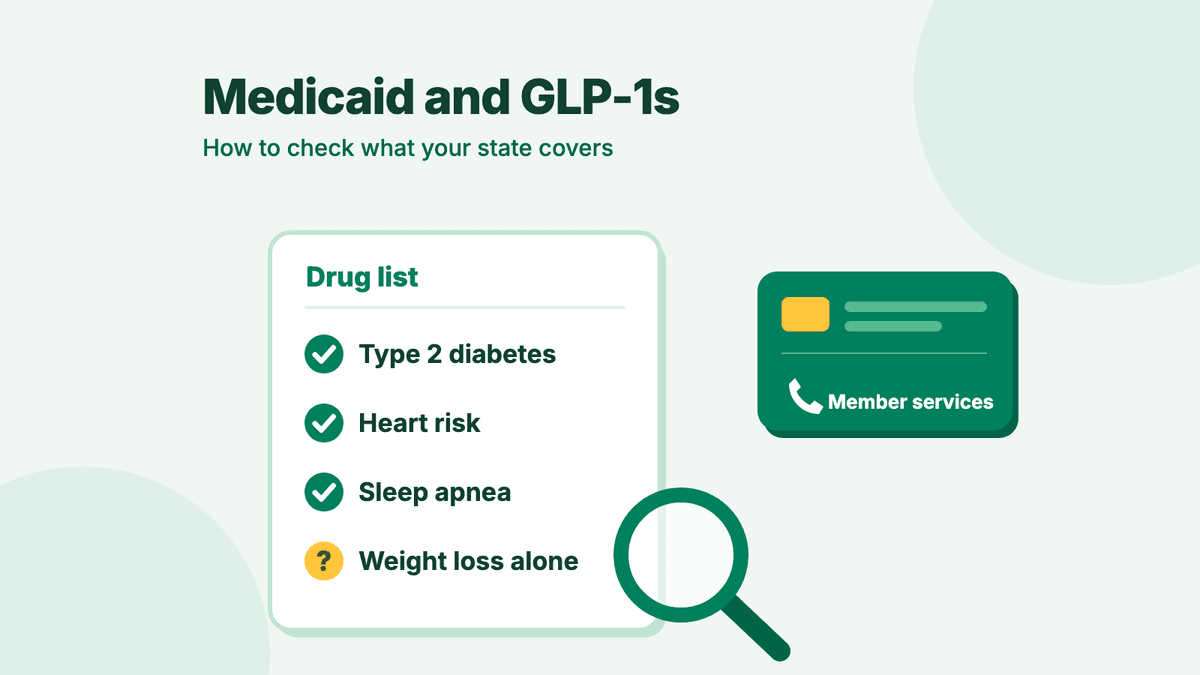
Medicaid coverage of Zepbound depends on your state and on why it's prescribed. Every state Medicaid program has to cover Zepbound for moderate to severe obstructive sleep apnea in adults with obesity, usually with prior authorization, but each state chooses whether to cover it for weight loss alone, and most don't. In Illinois, whose drug list every Medicaid health plan there uses, CountyCare included, the list in effect from October 1, 2026 covers Zepbound for sleep apnea only. To check your own state, find your plan's preferred drug list or call the member services number on your Medicaid card.
Someone asked our site assistant how to get Zepbound while on CountyCare, the Medicaid plan in Cook County, Illinois. It's a fair question, and the honest answer starts with "it depends where you live". Medicaid is run by each state, and on weight-loss medicines the states really do differ.
So this isn't a list of all 50 states. Those go out of date within weeks. It's how to find out what your own plan covers, using Illinois as the worked example, plus the new federal option that could change the answer next year.
The short answer
For weight loss alone, most state Medicaid programs don't cover Zepbound or Wegovy. For some other uses, every state has to. Whether a medicine is right for you, and for which use, is your prescriber's decision. What your Medicaid plan pays for is in its drug list.
What every state covers, and what each state decides
Federal law has a long-standing exception that lets states choose whether Medicaid covers weight-loss drugs at all. That exception is about weight loss, not other conditions. So since the FDA approved Wegovy to lower heart risk and Zepbound for sleep apnea, state programs have had to cover them for those uses, according to KFF, the health policy research group.
From KFF
What Medicaid covers, and what's up to your state
Why is it prescribed?
For these uses
Every state's Medicaid program covers it
- GLP-1s for type 2 diabetes: usually with rules such as prior authorization
- Wegovy to lower heart risk: since March 2024, for people with heart disease
- Zepbound for sleep apnea: since December 2024, for moderate to severe obstructive sleep apnea in adults with obesity
Usually with prior authorization.
For weight loss alone
Each state decides
KFF counted 13 state programs covering GLP-1s for obesity in January 2026, and some have stopped since.
Check your own state's drug list.
That count of 13 is from January, and it's already out of date. Rhode Island, for one, says that "beginning October 1, 2026, Rhode Island Medicaid will no longer cover certain GLP-1 receptor agonists when they are prescribed solely for weight loss." That came through the state budget. KFF's January brief also names California, New Hampshire, Pennsylvania and South Carolina as states that had ended coverage. Any count you read, including ours, needs a date beside it.
Illinois and CountyCare: what the drug list says
Illinois makes this easier than most, because there's one list. CountyCare says it uses "the same PDL as HealthChoice Illinois and all Medicaid Health Plans in Illinois". PDL is short for preferred drug list, and every Illinois Medicaid health plan has used the state's list since January 1, 2020.
The Illinois Medicaid Preferred Drug List in effect from October 1, 2026 has an anti-obesity section. It lists Wegovy (the pens and the tablets) and Zepbound (the vials, the pens and the KwikPen) as non-preferred, with three notes underneath:
- "Wegovy covered for MACE & MASH only."
- "Zepbound covered for OSA only."
- "Wegovy and Zepbound will not be covered for weight loss alone."
In plain words: MACE means major heart events, such as a heart attack or stroke, so this is Wegovy prescribed to lower that risk in people with heart disease. MASH is a fatty liver disease with liver scarring. OSA is obstructive sleep apnea. And "non-preferred" on a drug list usually means your prescriber has to ask for approval first, called prior authorization, and explain why it's needed.
From the Illinois drug list, October 1, 2026
Illinois's drug list: what each medicine is covered for
| Prescribed for | Wegovy | Zepbound |
|---|---|---|
| Lowering heart riskMACE: heart attack or stroke | YesCovered | NoNot covered |
| MASHa fatty liver disease | YesCovered | NoNot covered |
| Sleep apneaOSA | NoNot covered | YesCovered |
| Weight loss alone | NoNot covered | NoNot covered |
Both are listed as non-preferred, so expect your prescriber to need approval first, called prior authorization.
So for the question we were asked: on CountyCare, as of October 21, 2026, Zepbound prescribed for weight loss alone isn't covered. It can be covered for sleep apnea, if your prescriber decides it's right for you and the approval goes through. These lists change during the year, so check the current Illinois list before you rely on this.
How to check your own state, step by step
You don't need to read a 146-page PDF (Illinois's is exactly that long). These steps get you to the answer for your own plan.
How to check
Finding out what your Medicaid plan covers
- Look at your card
It names your health plan, or says your state runs your coverage directly. Either way, the member services number is on it.
- Find the drug list
Search your plan's or your state Medicaid agency's site for its preferred drug list or formulary.
- Find the medicine
Look for its name, whether it's preferred or non-preferred, whether it needs prior authorization, and any note on which uses are covered.
- Call member services
Ask the questions below and write down the date and who you spoke to.
- Talk to your prescriber
They decide whether a medicine is right for you, and they send any prior authorization request.
Not sure who runs your Medicaid? Medicaid.gov has a state-by-state list of Medicaid agencies with their phone numbers.
One tip from reading these lists: GLP-1 medicines can sit in two places. In Illinois's list, Ozempic and Mounjaro are with the diabetes medicines, and Wegovy and Zepbound are in a separate anti-obesity section. Other states lay their lists out differently. If a medicine isn't on the list at all, ask member services what that means for your plan.
What to ask your plan
- Is this medicine on your drug list, and for which uses?
- Does it need prior authorization, and what does my prescriber need to send?
- Is it covered for weight management, or only for other conditions?
- Is anything changing on January 1, 2027?
- Has our state joined the BALANCE model?
Member services can tell you the rules. They can't usually tell you whether you'll be approved, because that depends on what your prescriber sends.
If the answer is no: appeals and fair hearings
If Medicaid turns down a prior authorization, you have a right to challenge it. Federal rules list "a prior authorization decision" among the things you can ask a state fair hearing about. How you get there depends on how your Medicaid works.
From the federal rules
If Medicaid says no: the appeal path
In a Medicaid health plan, such as CountyCare
The plan says no
It sends you a notice of its decision.
Appeal to the plan
Within 60 calendar days of the date on its notice.
The plan decides
Within 30 calendar days, or 72 hours for a fast-track appeal. Either can be extended by up to 14 days.
Still no? Ask for a state fair hearing
Your state sets the deadline, 90 to 120 days from the plan's decision. Illinois's guide says 120.
If a plan misses its own deadlines, you can go straight to a fair hearing.
If your state runs your Medicaid directly
The state says no
It mails you a notice of its decision.
Ask the state for a fair hearing
By the state's deadline, which can't be more than 90 days from the date the notice was mailed.
If you're in a Medicaid health plan
CountyCare is one. You appeal to the plan first, within 60 calendar days of the date on its notice. The plan has up to 30 calendar days to decide, or 72 hours for a fast-track appeal if waiting could seriously harm your health. Either can be extended by up to 14 days.
If the plan says no again, you can ask your state for a fair hearing. Your state sets the deadline, somewhere between 90 and 120 days from the plan's decision. Illinois's guide (May 2021) says 120 calendar days. If a plan misses its own deadlines, federal rules let you go straight to a fair hearing.
If your state runs your Medicaid directly
You ask the state for a fair hearing. The state sets the deadline, which can't be more than 90 days from the date the notice was mailed.
Your notice should say how to appeal and by when, so go by that. One honest caveat: an appeal checks whether the rules were applied to you correctly. It won't usually make a state cover a use its program leaves out, such as weight loss alone in Illinois.
BALANCE: the one to watch
BALANCE is a new, voluntary program from the Centers for Medicare & Medicaid Services (CMS). For states that join, it adds coverage of GLP-1 medicines for weight management, on top of the uses already covered. In CMS's words, it covers "all formulations of Mounjaro, Ozempic, Rybelsus, and Wegovy, the KwikPen formulation of Zepbound, and Foundayo", and people also get a lifestyle program "provided by the manufacturer at no cost".
From CMS
BALANCE at a glance
States choose whether to join
They can start any time from May 2026 through January 1, 2027. Applications were due by July 31, 2026. A state that hasn't joined by January 1, 2027 can join later only at CMS's discretion.
Zepbound in the KwikPen only
Not the vials or the single-dose pens. Wegovy, Ozempic, Rybelsus and Mounjaro are covered in every form, and so is Foundayo.
Not a guarantee
Prior authorization rules still apply, and CMS says the model "will not guarantee coverage for any individual".
No states named yet
CMS's page, last changed September 29, 2026, names no participating states. Indiana has said it will take part.
On July 30, 2026, Indiana's governor directed the state's Medicaid agency to take part, saying details on "eligibility criteria and timing" would follow. We couldn't find another state that has announced it, and CMS's own page still lists none. If your state joins, the form of the medicine will matter, because only the Zepbound KwikPen is included. Our KwikPen guide explains how that pen works. Changing form is your prescriber's call.
If you have Medicare too
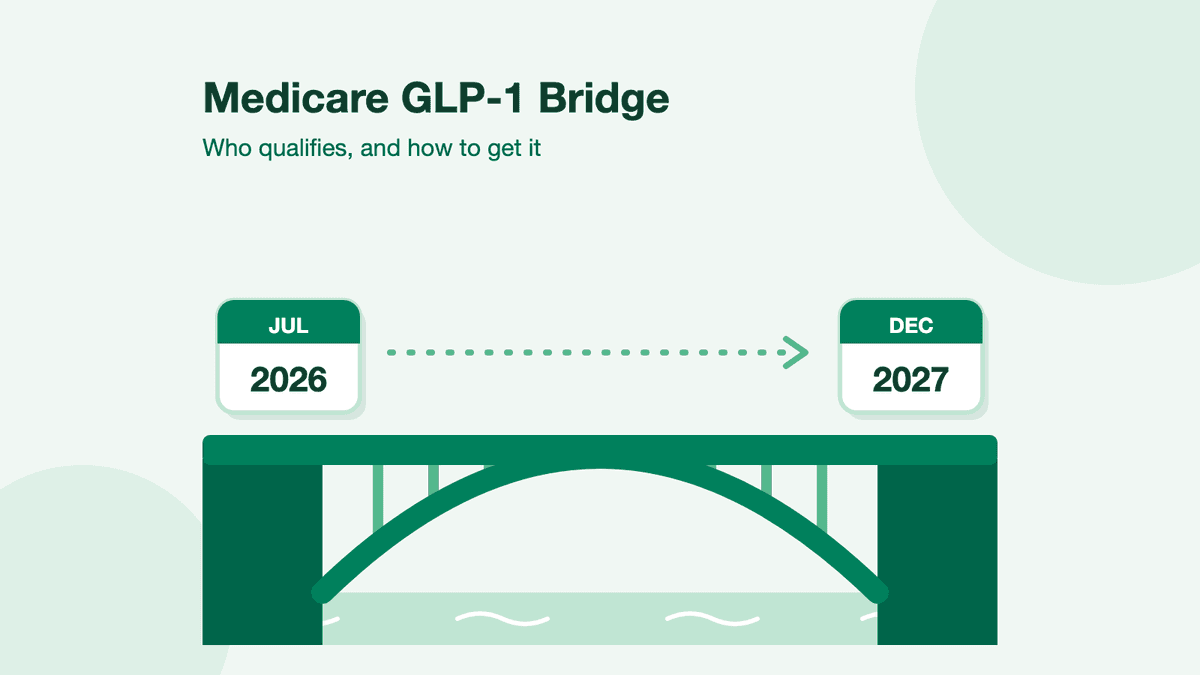
If you have both Medicare and Medicaid, there's a second route to know about. CMS says "dually-eligible beneficiaries who are enrolled in eligible Part D plan types and meet the prior authorization criteria will have access to GLP-1 drugs via the Medicare GLP-1 Bridge." The Bridge runs from July 1, 2026 to December 31, 2027, and covers Wegovy, Foundayo and the Zepbound KwikPen for weight management.
It sits outside your Part D plan, and CMS says "there is no low-income subsidy (LIS) provided", so Extra Help doesn't lower what you pay there. Our Medicare GLP-1 Bridge guide covers who qualifies and how your prescriber applies.
Savings cards and self-pay on Medicaid
Two things get mixed up online, so here's what Lilly's own terms say, read on October 21, 2026.
The Zepbound savings card is for people with commercial insurance. Its terms exclude anyone "enrolled in any state, federal, or government funded healthcare program, including, without limitation, Medicaid". So if you're on Medicaid, the savings card is out.
Paying for it yourself is different. Several websites say people on Medicaid can't buy Zepbound self-pay from Lilly, but Lilly's self-pay terms, for the vials and the KwikPen, don't exclude them. What they do say is that self-pay is cash only: the KwikPen self-pay card is "for self-paying (cash) patients only", and you agree not to "seek or accept reimbursement ... from any third-party payer, including private insurance or state or federal healthcare programs". In other words, Medicaid pays nothing toward it, and you agree not to claim any of it back.
Lilly's free-medicine program for people on low incomes, Lilly Cares, isn't open to people enrolled in Medicaid, its application form says. It also didn't list Zepbound when we checked on October 21, 2026. If you're comparing costs, our guide to what Zepbound costs and the US GLP-1 price page have the figures. Whether a medicine is right for you, and which one, is still a conversation for your prescriber.
Frequently asked questions
Does Medicaid cover Zepbound for weight loss?
Does Medicaid cover Zepbound for sleep apnea?
Does CountyCare cover Zepbound?
Does Illinois Medicaid cover Wegovy?
What is the BALANCE model?
Which states are in the BALANCE model?
Can I use the Zepbound savings card if I'm on Medicaid?
What if Medicaid says no to my prior authorization?
General information from CMS, KFF, the federal regulations and state Medicaid drug lists, checked October 21, 2026. It isn't medical, legal or financial advice. Your prescriber decides whether a medicine is right for you, and your state Medicaid office or plan has the final word on what it covers. Drug lists change during the year, so check yours.
View sources (20)
- Medicaid coverage of and spending on GLP-1s, KFF, January 16, 2026 (read October 21, 2026)
- Illinois Medicaid Preferred Drug List, effective October 1, 2026, Illinois Department of Healthcare and Family Services (PDF, page 36)
- Preferred Drug List, Illinois Department of Healthcare and Family Services
- Pharmacy and Preferred Drug List, CountyCare (page updated September 1, 2026)
- Formulary update, CountyCare, April 2021 (PDF)
- FY27 budget initiatives, Rhode Island Executive Office of Health and Human Services
- BALANCE Model, CMS Innovation Center (page modified September 29, 2026)
- BALANCE Model: State Medicaid Request for Applications, CMS, March 2026 (PDF)
- Governor Braun announces state Medicaid program will now cover GLP-1 treatments for eligible beneficiaries, WBIW, July 30, 2026
- Medicare GLP-1 Bridge, Centers for Medicare & Medicaid Services (page updated July 13, 2026)
- Medicare GLP-1 Bridge: information for providers, Centers for Medicare & Medicaid Services (page updated August 6, 2026)
- Zepbound terms and conditions, Eli Lilly and Company (CMAT-05333 08/2026, read October 21, 2026)
- Available medications, Lilly Cares Foundation (read October 21, 2026)
- Lilly Cares Foundation patient application, CMAT-02998 12/2025 (PDF, read October 22, 2026)
- 42 CFR 431, subpart E: fair hearings for applicants and beneficiaries, eCFR (current to October 20, 2026)
- 42 CFR 438.402: grievance and appeal system, general requirements, eCFR
- 42 CFR 438.408: resolution and notification of grievances and appeals, eCFR
- Understanding Medicaid fair hearings, Medicaid.gov, March 2024 (PDF)
- Health plan grievance and appeals process, Illinois Department of Healthcare and Family Services, May 2021 (PDF)
- Where can people get help with Medicaid and CHIP? Medicaid.gov