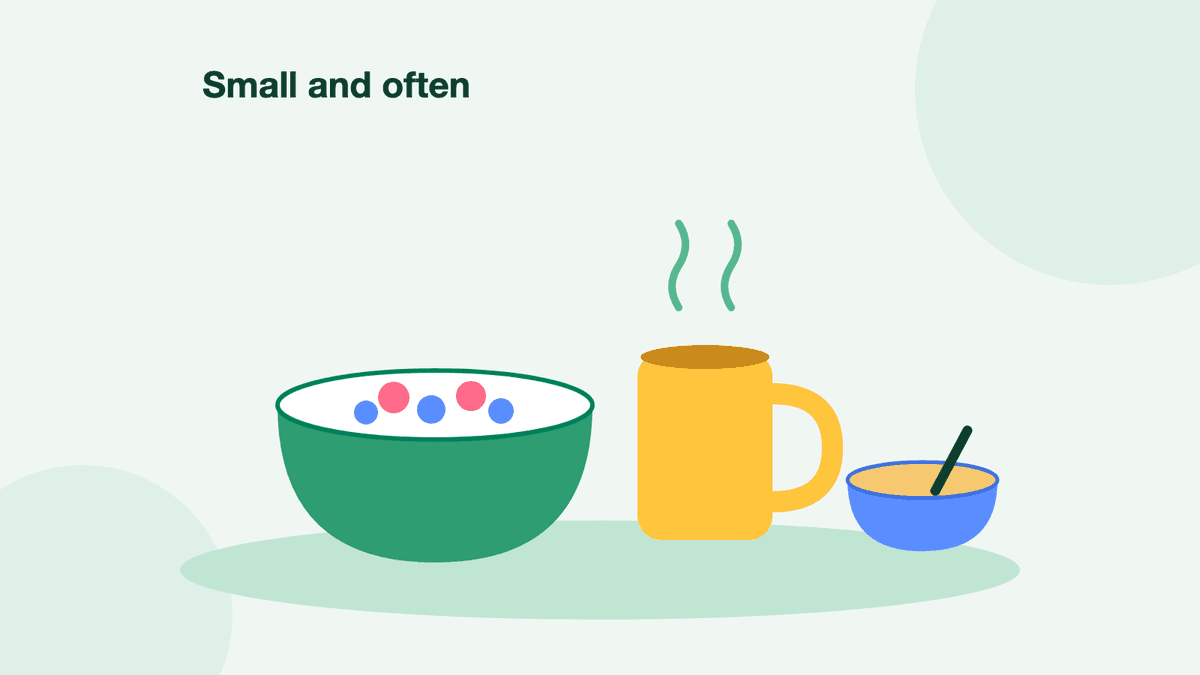
On Zepbound (tirzepatide), eat small meals at regular times instead of waiting until you're very hungry, make room for protein at each one, and keep drinking through the day. When appetite is low, soft and drinkable foods are often easier: yogurt, cottage cheese, eggs, soups and milk or yogurt smoothies. Large, greasy or fried meals and alcohol tend to make nausea worse. That's from a 2025 joint advisory by the American College of Lifestyle Medicine, the American Society for Nutrition, the Obesity Medicine Association and The Obesity Society.
Plenty of people get a Zepbound (tirzepatide) prescription and very little advice about food. In a small 2025 US study of 69 people taking a GLP-1 medicine (Johnson and colleagues, Frontiers in Nutrition), 51% had been told how to manage side effects, and 20% had been referred to a dietitian. So if you're standing in the kitchen wondering what you're supposed to eat now, you're in good company.
This guide is built on a 2025 joint advisory from the American College of Lifestyle Medicine, the American Society for Nutrition, the Obesity Medicine Association and The Obesity Society, plus the Zepbound label itself. No calorie counting, no meal plan to follow to the letter. Just what tends to help.
Why eating feels different on Zepbound
Zepbound slows how fast food leaves your stomach and turns down appetite signals in your brain. You feel full sooner and stay full longer. Your tastes can shift too. The advisory notes that many people lose their taste for fatty, sugary and very savory foods, while nausea can make others want plain, starchy comfort food. Some people can't face certain foods at all, usually when they start or step up a dose.
None of that is a problem in itself. What matters is that the smaller amount you eat still gives your body what it needs.
The basics
The short version:
- Small meals at regular times, rather than going a long stretch without food and then eating a lot.
- Protein at every meal: fish, chicken, eggs, dairy, beans or tofu. The advisory makes protein a priority to help protect your muscle and bones, especially with strength training.
- Plenty of plants: fruit, vegetables, whole grains, nuts and seeds.
- Enough to drink, through the whole day.
- Room for treats, in small portions, rather than cutting them out.
When nothing sounds good
Low appetite is the point of the medicine, but some days it goes further. Nothing sounds good, and a meal feels like a chore. The advisory describes a cycle worth knowing about: nausea makes you skip food, an empty stomach makes the nausea worse, and that makes eating even less likely. Nausea is often worse in the morning and after a long gap without food.
What it suggests instead:
- A small breakfast, then small meals through the day, with something to drink each time.
- Foods that are easier to face. Yogurt, cottage cheese, soups and milk or yogurt smoothies often appeal more than heavier foods like red meat, cold cuts or hard cheese.
- Ginger or peppermint tea. Some people find acupressure wristbands help too.
- A reminder on your phone to eat, if you keep forgetting. The advisory suggests exactly that.
- If you're still struggling, tell your prescriber. Anti-nausea medicine is an option, and so is taking dose increases more slowly.
Easier foods, from drinkable to a small plate
Drinkable
Milk, a smoothie made with yogurt or milk and fruit, broth or soup, ginger or peppermint tea
Spoonable
Yogurt, cottage cheese, oatmeal, soup with beans or lentils
Soft
Eggs, fish, tofu, a banana, toast
A small plate
Chicken or fish, soft-cooked vegetables, rice
Start wherever your appetite is today. Yogurt, cottage cheese, soups and smoothies are the 2025 advisory's own examples.
Based on the 2025 nutrition advisory
One example of a low-appetite day
Small amounts, often, with something to drink each time
- When you wake up
Something small, even a few spoonfuls of yogurt or a slice of toast.
- Mid-morning
A drink with something in it: milk, or a smoothie made with yogurt and fruit.
- Midday
Soup, or eggs on toast.
- Afternoon
Cottage cheese or yogurt with fruit, and ginger or peppermint tea if you're queasy.
- Evening
A small plate: fish or chicken, soft vegetables, rice.
What tends to backfire
Going a long time without eating, then a large or greasy meal when you're very hungry.
Shot day and step-up weeks
There's no special shot-day diet. Zepbound can be taken at any time of day, with or without food.
What matters more is where you are on the dose ladder. Stomach side effects are most likely when you start and after each dose increase. For the first few days of treatment, the advisory suggests smaller, more frequent meals and going easy on fatty foods and very high-fiber foods until your stomach settles. The same approach can help in the days after each step up. If you know which days of the week tend to be hard, it helps to have easy food in the house for them.
What makes side effects worse
No food is off limits on Zepbound. But some make a queasy day worse, and they're what people usually mean by "foods to avoid".
From the 2025 nutrition advisory
What tends to make a queasy day worse
Large meals
The advisory notes vomiting is more likely after a big meal.
Greasy, fried and very fatty food
Fat slows your stomach down even more, and large or high-fat meals can bring on nausea or diarrhea.
Alcohol
It can make nausea and reflux worse. The advisory says to keep it to a minimum.
Very high-fiber foods, in the first days of treatment
Go easy until your stomach settles. After that, fiber helps (see constipation, below).
For everyday eating, the advisory leans toward whole foods and away from sugary drinks, processed meats and most fast food. It also says to stay flexible and enjoy treats in small portions.
Constipation and diarrhea
Constipation and fiber
The advisory's first steps are fluids and fiber from food, added gradually: fruit and vegetables, beans, whole grains, and prunes or other dried fruit. Protein and fat slow your stomach further, so a run of heavy meals can make constipation worse. If changing what you eat isn't enough, ask your pharmacist or prescriber, because there are simple over-the-counter options. The US National Institutes of Health has a plain guide to eating for constipation too.
Diarrhea
Smaller meals with less fat, and plenty to drink. If it's severe or won't go away, tell your healthcare provider, because losing fluids can lead to kidney problems.
Drinking enough
The label doesn't say how much to drink. The Medication Guide does say that nausea, vomiting and diarrhea can dehydrate you, which may cause kidney problems, and that drinking fluids helps reduce that chance.
From the label and the 2025 advisory
Drinking enough, in practice
With every meal and snack
Have something to drink each time you eat, and sip through the day.
When you're unwell
Drink more when you're throwing up or have diarrhea.
Can't keep fluids down?
Tell your healthcare provider right away. Do the same if nausea, vomiting or diarrhea won't go away.
Protein without counting
You don't need to weigh or count anything to eat enough protein. One simple habit: make sure each meal has a protein food, and eat that part first, so it doesn't get left behind when you fill up fast. Easy options when appetite is low include eggs, Greek yogurt, cottage cheese, milk, fish, chicken, tofu, and beans or lentils.
If you can, add some strength training. The advisory names it alongside protein as the way to protect your muscle while you lose weight.
Keeping track without numbers
The advisory recommends checking in on what you eat and drink while you're on these medicines, using a food log or food photos. That doesn't have to mean counting. A few words a day is enough to spot the pattern: which days were hard, what went down easily, how the week after a dose increase felt. It also gives your prescriber something real to look at.
When to call your doctor
From the Zepbound Medication Guide
When to stop, call or get help
Severe stomach pain that won't go away
With or without nausea or vomiting, and it can spread to your back. Stop Zepbound and call your healthcare provider right away. It can be a sign of pancreatitis.
Signs of a serious allergic reaction
Swelling of your face, lips, tongue or throat, trouble breathing or swallowing, severe rash or itching, fainting or feeling dizzy, or a very fast heartbeat. Stop Zepbound and get medical help right away. Call 911 if you need to.
Nausea, vomiting or diarrhea that won't go away
Tell your healthcare provider right away. Losing fluids can lead to kidney problems.
Signs of gallbladder problems
Pain in your upper stomach, fever, yellowing of your skin or eyes, or clay-colored stools. Tell your healthcare provider.
And tell any doctor planning surgery or a procedure with anesthesia or deep sedation that you take Zepbound.
Frequently asked questions
What should I eat on Zepbound when I'm not hungry?
What foods should I avoid on Zepbound?
What should I eat on Zepbound shot day?
Can I drink alcohol on Zepbound?
How much water should I drink on Zepbound?
Do I need to count calories on Zepbound?
Why do I feel sick after eating on Zepbound?
Can I drink coffee on Zepbound?
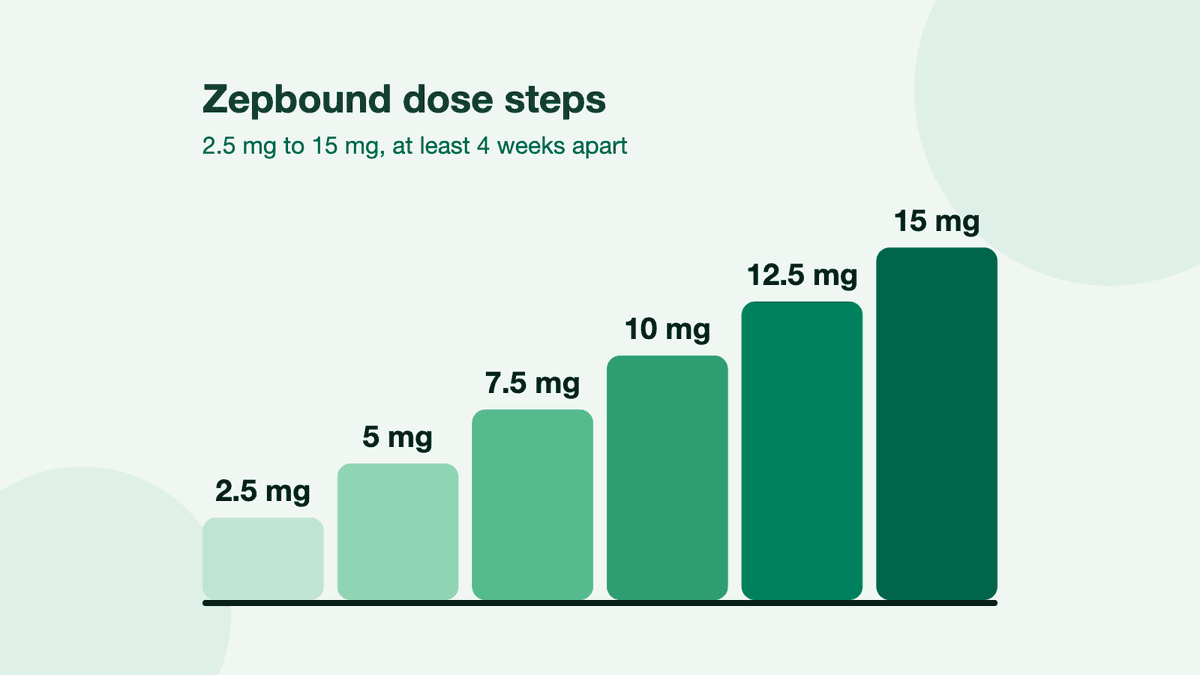
General information, not medical or dietary advice. If you have diabetes, kidney problems or a history of an eating disorder, ask your care team or a registered dietitian what's right for you. For the full dose ladder, see the Zepbound dosage schedule.
View sources (6)
- Mozaffarian D, et al. Nutritional priorities to support GLP-1 therapy for obesity: a joint Advisory from the American College of Lifestyle Medicine, the American Society for Nutrition, the Obesity Medicine Association, and The Obesity Society. Am J Clin Nutr. 2025;122(1):344-367
- The same joint advisory, free to read in full (American Journal of Lifestyle Medicine copy, PubMed Central)
- Zepbound (tirzepatide) US prescribing information, Eli Lilly, revised 08/2026
- Zepbound Medication Guide, Eli Lilly, revised 08/2026
- Johnson B, et al. Investigating nutrient intake during use of glucagon-like peptide-1 receptor agonist: a cross-sectional study. Front Nutr. 2025;12:1566498
- Eating, diet, and nutrition for constipation, National Institute of Diabetes and Digestive and Kidney Diseases