Ultra-processed food, or UPF, is everywhere in the headlines, and more than half of the calories the average person in the UK eats now come from it (British Heart Foundation). But the conversation often slides into guilt and absolutes. This is the calmer version: what UPF actually is, what the strongest evidence really shows about weight, and what to do about it without overhauling your whole life.
Quick answer: in the best controlled study, people ate around 500 calories a day more on an ultra-processed diet, even when it was matched for sugar, salt, fat and fibre. The likely culprit isn't one evil ingredient. It's that UPF is soft, energy-dense and moreish, so it's easy to eat too much before you feel full. You don't need to ban it. Just aim for mostly minimally processed.
What counts as ultra-processed food
The term comes from the NOVA classification, which sorts food by how much industrial processing it has had, not by its nutrients (Monteiro et al., NOVA). There are four groups:
- Group 1 (unprocessed or minimally processed): fresh, frozen or dried fruit and veg, plain meat and fish, eggs, milk, plain yoghurt, dried beans, plain nuts.
- Group 2 (culinary ingredients): oils, butter, sugar and salt, used in cooking rather than eaten alone.
- Group 3 (processed foods): group 1 foods preserved with group 2 ingredients, like tinned veg or fish, cheese and freshly made bread.
- Group 4 (ultra-processed): industrial formulations with ingredients you wouldn't keep at home, like protein isolates, modified starches, emulsifiers and sweeteners, engineered to be convenient and very moreish.
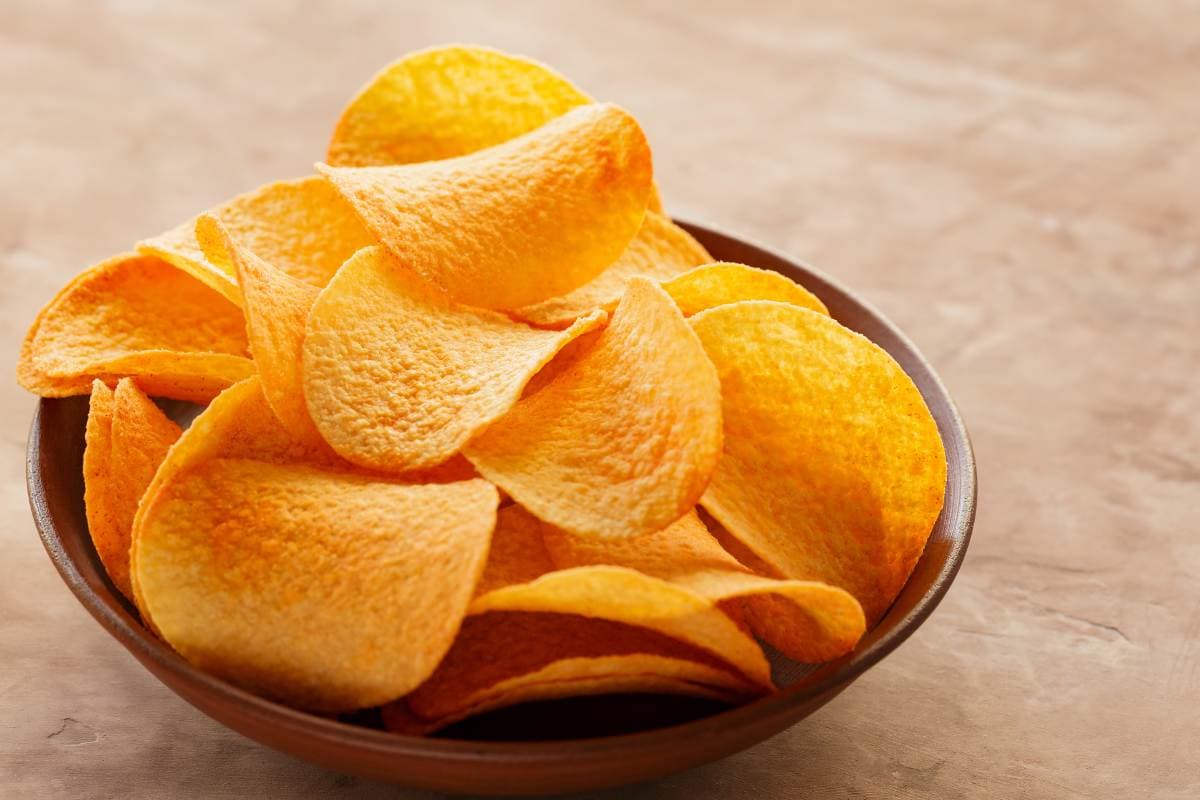
In practice, group 4 means fizzy and "diet" drinks, crisps, mass-produced packaged bread, sugary cereals, confectionery, many ready meals and reconstituted meat products. The minimally processed equivalents are the foods to lean on: porridge oats, plain yoghurt, eggs, tinned beans, and fresh or frozen veg.
What the evidence actually shows
The standout study is a 2019 trial run on a metabolic ward at the US National Institutes of Health. Twenty adults spent two weeks eating an ultra-processed diet and two weeks eating a minimally processed one. The two diets were carefully matched for calories on offer, sugar, salt, fat and fibre, and people could eat as much or as little as they liked. On the ultra-processed diet they ate about 500 calories a day more and gained weight. On the minimally processed diet they lost it (NIH, 2019). Because the nutrients were matched, the finding points at the processing itself, things like texture, speed of eating and palatability, rather than just sugar or fat. It was a small, short study, but it is the strongest cause-and-effect evidence we have.
Zoom out to whole populations and the picture is consistent. A 2024 umbrella review in The BMJ, pooling data on nearly 10 million people, linked higher UPF intake to a greater risk of obesity, type 2 diabetes, heart disease and earlier death (Lane et al., BMJ 2024). A large French cohort similarly tied more UPF to more weight gain (NutriNet-Santé, 2020).
One honest caveat matters here. Apart from short trials like the 2019 one, this population evidence is observational. It shows a strong, repeated association, not absolute proof of cause, because people who eat a lot of UPF also tend to differ in income, smoking and activity. The UK's scientific advisory committee, SACN, calls the link "concerning" but stresses this same point, and is keeping it under review (SACN, 2023).
Why ultra-processed food makes us overeat
The leading explanations aren't mysterious:
- It's eaten faster. Soft, low-resistance food is eaten more quickly, so more goes in before fullness signals catch up. In the NIH trial, people ate noticeably faster on the UPF diet.
- It's energy-dense. We tend to eat a similar weight of food at a meal, so calorie-dense food simply delivers more calories for the same fullness.
- It's hyper-palatable. Engineered combinations of fat, sugar, salt and refined carbs are easy to keep eating past the point of needing to.
- It's often low in protein and fibre, the two things that fill you up most, relative to its calories.
You'll also see additives and the gut microbiome mentioned. That research is genuinely interesting but still early and not proven in humans (Nature Reviews Endocrinology, 2025), so it's worth holding lightly.
If you're on a GLP-1
GLP-1 medications like Wegovy and Mounjaro turn down appetite and quiet the "food noise" that pulls you toward exactly these hyper-palatable foods. That makes a lower-UPF way of eating much easier to actually do. It also makes food quality matter more: when you're eating far fewer calories, each one has to carry more nutrition, so protein, fibre and minimally processed foods help you avoid gaps.
It matters for muscle, too. A meaningful share of GLP-1 weight loss can be lean tissue, so protein matters, and many UPF foods are low in it for their calories (American Diabetes Association). One more practical thing: greasy, very energy-dense UPF tends to sit badly when GLP-1 nausea strikes, so simpler, less processed meals are usually better tolerated.
Realistic swaps (no purism required)
The goal is "mostly minimally processed," not zero UPF. Telling busy people to never touch it ignores time, money and convenience, and isn't what the evidence demands. Cut the least nutritious items first and keep the useful ones:
- Sugary or "diet" fizzy drink → sparkling water, or plain tea and coffee
- Flavoured yoghurt → plain Greek yoghurt with fruit (more protein, less sugar)
- Sugary cereal → porridge oats with fruit and nuts
- Crisps or a biscuit → plain nuts, fruit or a boiled egg
- Shop-bought sandwich or ready meal → a batch-cooked portion from the freezer
- White sliced packaged bread → a wholemeal or seeded loaf (still processed, but more fibre)
To spot UPF on a UK label, read the ingredients list. Shorter and more recognisable is generally better. Then use the front-of-pack traffic lights to compare two versions of the same thing. If you work at a desk, the single best move is to keep good defaults within reach, like nuts, fruit or plain yoghurt, so the easy option isn't the vending machine (NHS Eatwell Guide).
The honest caveats
NOVA gets fair criticism for being broad. It lumps clearly harmful items like sugary drinks in with genuinely useful ones like wholemeal bread, baked beans and fortified cereals (Proceedings of the Nutrition Society). And UPF is often cheaper, faster and more accessible, so "just cook from scratch" ignores real barriers. None of this is about being a perfect eater or feeling guilty. It's about shifting the balance where you reasonably can.
Curious where your calories come from?
Log your meals in plain English and Healthcount breaks down the calories, protein and fibre. Free, no sign-up needed.
Try the free macro counterFAQs
What is ultra-processed food?
Industrial formulations made mostly from ingredients and additives you wouldn't cook with at home. That's group 4 of the NOVA system. Think fizzy drinks, crisps, packaged bread, confectionery and many ready meals.
Is all processed food bad?
No. Tinned beans, plain yoghurt, frozen veg and wholemeal bread are processed but nutritious. The concern is a diet dominated by the least nutritious UPF.
Will cutting UPF help me lose weight?
It very plausibly helps, because UPF makes it easy to overeat. But you don't need to be perfect. Swapping the worst offenders and sticking to minimally processed food most of the time is the realistic win.