Creatine has a bit of an image problem. A lot of people still picture it as something only male bodybuilders take, or quietly worry it's bad for your kidneys. Neither is true. It's one of the most researched supplements there is, it's cheap, and it turns out to be quietly useful for your muscles, your brain, and, importantly if you're losing weight, for hanging on to the muscle you've got.
Quick answer: creatine monohydrate, 3 to 5g a day, helps you keep and build muscle when paired with resistance training, may help your brain under stress, and is safe for healthy adults, women very much included. It won't make you bulky or bloated, and the "bad for your kidneys" worry is a misunderstanding of a blood test, not real harm.
What creatine actually is
Creatine is a compound your body already makes and stores, mostly in your muscles. Its job is to help regenerate the quick-burst energy your cells use during short, intense effort (ISSN position stand, 2017). You also get some from food, mainly red meat and fish, but on a normal diet your muscle stores are only around 60 to 80% full. Supplementing tops them up, raising muscle creatine by roughly 20 to 40%, which is where the benefits come from. Vegetarians and vegans start lower, so they often respond most.
The benefits for your body
This is the best-established part. The International Society of Sports Nutrition calls creatine monohydrate "the most effective" supplement available for building lean muscle and high-intensity exercise capacity (ISSN, 2017). Paired with training, it lets you do a little more work, which adds up to greater gains in strength and muscle than training alone.
The part that matters most for anyone over 40, or anyone losing weight, is muscle preservation. In a review of 22 studies in older adults, creatine combined with resistance training added about 1.4kg more lean tissue than training with a placebo (Chilibeck et al., 2017). When you're in a calorie deficit, protecting muscle is half the battle, and creatine plus strength training is one of the most reliable tools for it.
The benefits for your brain
Your brain runs on the same energy system, and about 5% of your body's creatine sits there. That's the basis for the brain research. Here it's worth being honest about how strong the evidence is, because it varies.
For thinking under pressure, the signal is encouraging. Reviews suggest creatine may help short-term memory and reasoning, with the clearest effects when the brain is stressed, for example during sleep deprivation or in people who don't eat meat (Avgerinos et al., 2018). In well-rested people, the benefits are more modest. One reason is that brain stores are harder to raise than muscle stores.
For mood and depression, be cautious. An early trial found women with depression who added creatine to their antidepressant improved more than those who added a placebo, which is a promising signal. But the most rigorous recent review, pooling 11 trials, found the overall effect small and uncertain, and concluded it could be trivial (British Journal of Nutrition, 2025). So creatine plays a real role in brain energy, and the early findings are interesting, but it is not a treatment for depression and shouldn't replace proper care.
Creatine for women
If you're a woman who's been put off creatine, this section is for you. Women naturally store far less creatine than men, so there's a good case it's especially worth taking. A dedicated review of creatine in women's health found no adverse effects on the gut, kidneys, liver or heart, and a low risk-to-benefit ratio (Smith-Ryan et al., 2021).
The two big fears are both myths:
- "It'll make me bloated." Any water creatine holds goes inside your muscle cells, not under your skin. A controlled trial in active women found it shifted fluid into cells without increasing body weight (Moore et al., 2023).
- "It'll make me bulky." Creatine is not a steroid and doesn't add fat. In women it raises lean muscle without raising body fat (Antonio et al., 2021).
Women use the same dose as men, and there's growing interest in its relevance across the menstrual cycle and into menopause.
How to take it
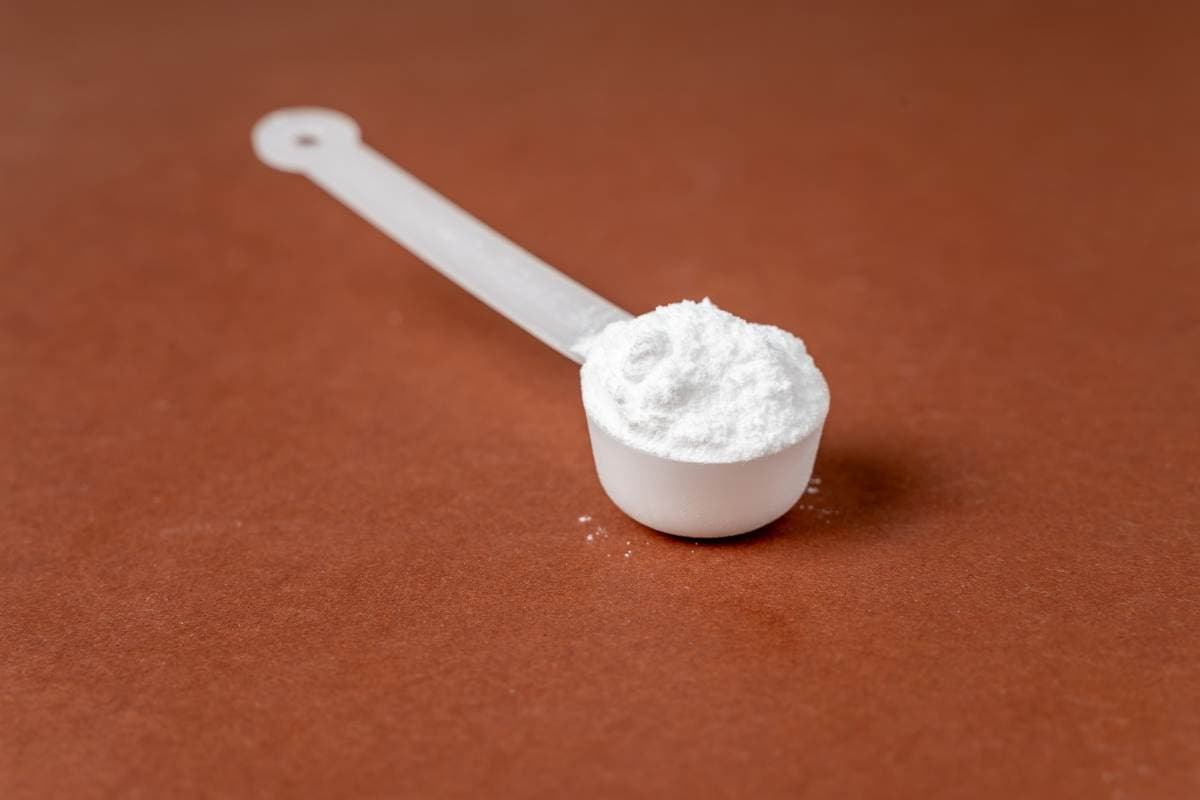
- Form. Creatine monohydrate is the gold standard. It's the most studied, the cheapest, and as effective as any fancier version. Don't pay extra for "HCl" or buffered types.
- Dose. 3 to 5g a day, every day. Consistency matters more than timing.
- Loading is optional. Taking about 20g a day for 5 to 7 days saturates your stores faster, but plain 3 to 5g a day gets you there in a few weeks with less faff (ISSN, 2017).
- When. Any time. Taking it with a meal containing carbs slightly improves uptake, but it's a minor detail. Stir it into water or a drink.
Is creatine safe?
For healthy people, the evidence is reassuring. There is no compelling evidence that creatine harms healthy individuals, even with long-term use, and reviews specifically find it does not impair kidney function in healthy or clinical populations (ISSN, 2017).
So where does the kidney myth come from? Creatine raises a blood marker called creatinine, because creatinine is simply creatine's natural breakdown product. Doctors often use creatinine to estimate kidney function, so a creatine user can get a slightly "off" reading that looks alarming but reflects the supplement, not damage (Antonio et al., 2021). It's worth telling your GP you take it if you're having bloods done. People with existing kidney disease, or who are pregnant or breastfeeding, should check with a doctor first.
Creatine and GLP-1 weight loss
Here's the link that ties it together. A meaningful share of the weight lost on GLP-1 medications like Wegovy and Mounjaro can be lean tissue rather than fat, partly because the weight comes off so fast (STEP 1 body-composition analysis). The standard defence is resistance training plus enough protein. And because creatine plus resistance training is the best-evidenced way to retain muscle and strength, researchers have started to suggest it as a sensible addition for people on these drugs (Forbes & Candow, 2026).
To be clear and honest: no trial has yet tested creatine specifically in people on GLP-1s, so this is a well-reasoned extension of strong muscle-preservation evidence, not a proven GLP-1 result. One practical note: these medications can blunt thirst, so stay on top of your fluids, which suits creatine anyway.
Losing weight and want to keep your muscle?
Track your weight, doses, food and exercise together in Healthcount, so you can see the full picture, not just the number on the scale.
Try the free macro counterFAQs
Is creatine safe?
For healthy people, yes. It's one of the most studied supplements there is, with no compelling evidence of harm to kidneys or liver. Check with a doctor first if you have kidney disease or are pregnant.
Is creatine safe for women?
Yes. Reviews find no adverse effects in women, the same 3 to 5g dose works, and it doesn't cause bloating or bulk.
Does creatine help you lose weight?
Not directly, it's not a fat burner. But it helps you keep muscle while you lose fat, which is exactly what you want on a deficit or a GLP-1.
Will creatine make me gain weight?
Only a little water inside your muscles early on, not fat or visible bloat. Any lasting gain is lean muscle.
Key sources
- Kreider et al., ISSN position stand, 2017
- Chilibeck et al., 2017: Creatine, training and muscle in older adults
- Smith-Ryan et al., 2021: Creatine in women's health
- Antonio et al., 2021: Common questions and misconceptions about creatine
- British Journal of Nutrition, 2025: Creatine and depression meta-analysis