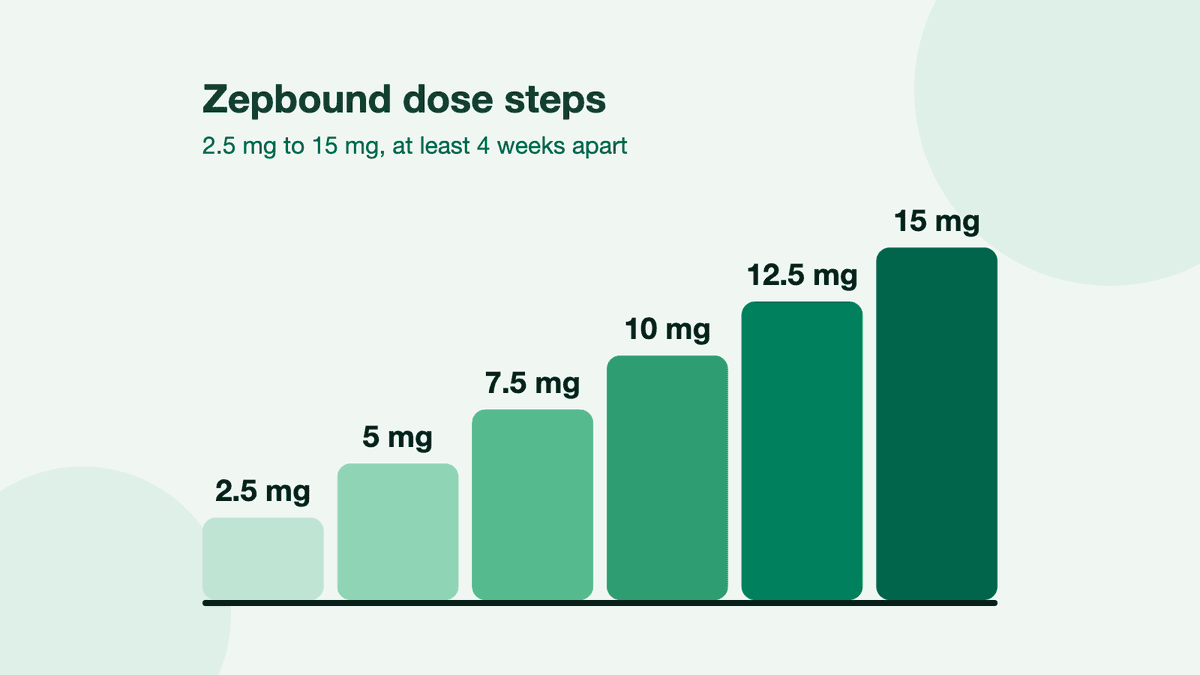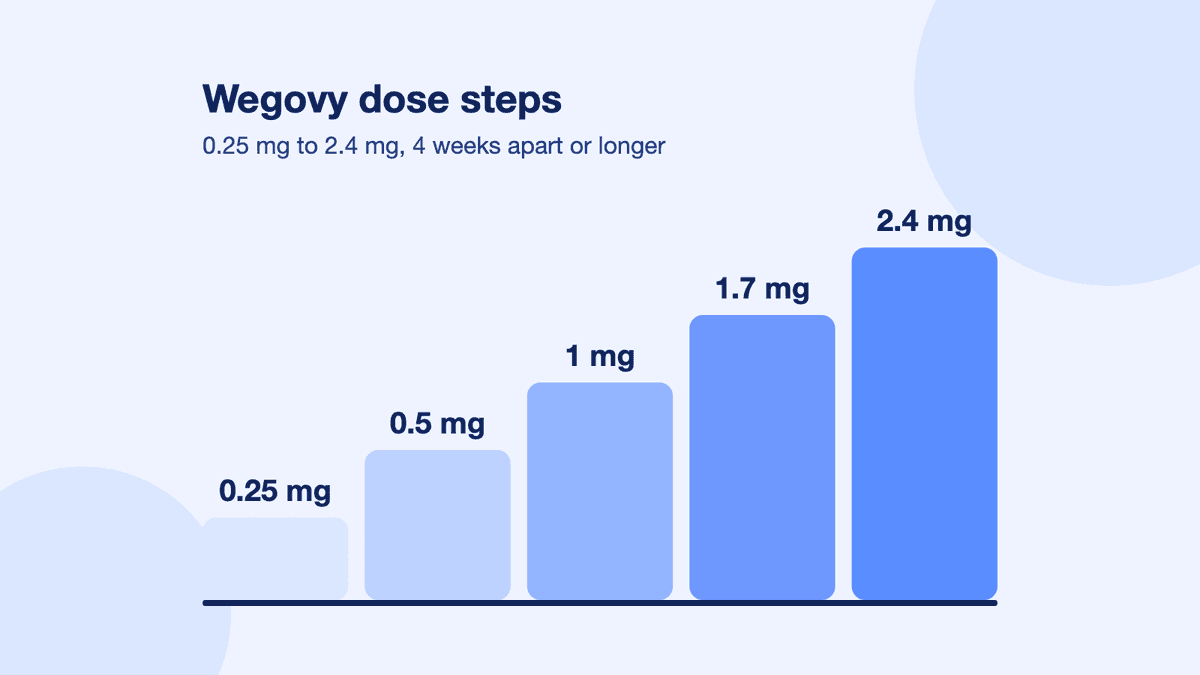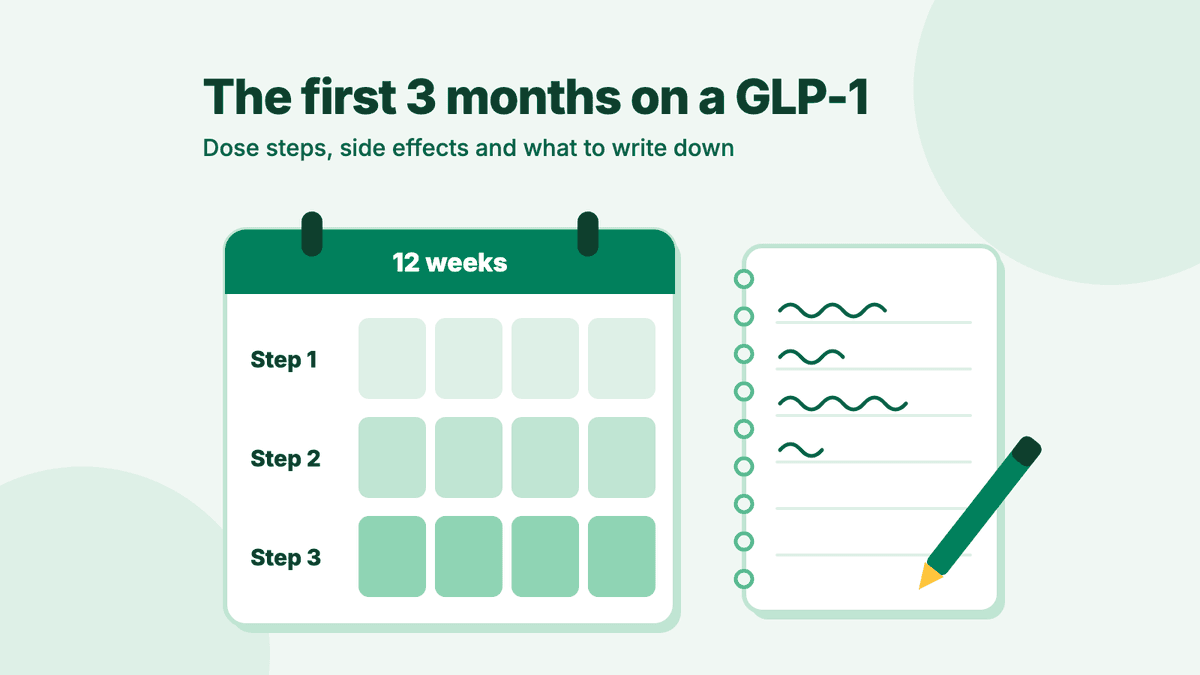
The first 3 months on Zepbound, Wegovy or Foundayo are mostly about stepping up the dose. Each label starts low and goes up in steps of at least 4 weeks or 30 days to make stomach side effects less likely, so by week 12 nobody can be on the highest dose yet. The main trials reported their average results after 64 to 72 weeks, not 3 months. Early on, what helps is noticing your appetite, side effects and how meals change, and telling your prescriber about anything that worries you.
The first few weeks on a GLP-1 medicine can feel like a lot of waiting. You start on a dose lower than the one you'll be on later, you're watching for side effects, and everyone online seems to have a number for what you "should" see by month three.
I want to deal with that number first, because it doesn't exist in the way people think. What the first 3 months are really about is getting used to the medicine, one dose step at a time. So that's what this page covers: why the steps are there, what people commonly notice, what's worth writing down, and when to call your prescriber.
Why the first 3 months are mostly dose steps
Every one of these medicines starts low and goes up slowly, and the labels say why. The Zepbound and Wegovy labels give their dose steps "to reduce the risk of gastrointestinal adverse reactions", and Foundayo's says much the same. That's label language for nausea, vomiting, diarrhea and the rest.
Diagram, not to scale
At week 12, partway up the ladder
So at week 12, people are partway up the ladder. Here's the fastest each label allows.
| Medicine | Starts at | Then | Highest by week 12 |
|---|---|---|---|
| Zepbound Weekly injection | 2.5 mg for 4 weeks | Then 5 mg. It can go up 2.5 mg at a time, after at least 4 weeks on each dose | 7.5 mg |
| Wegovy injection Weekly injection | 0.25 mg for 4 weeks | Then 0.5 mg, 1 mg and 1.7 mg, 4 weeks each, and 2.4 mg from week 17 | 1 mg |
| Wegovy pill Daily tablet | 1.5 mg for 30 days | Then 4 mg and 9 mg, 30 days each, and 25 mg from day 91 | 9 mg |
| Foundayo Daily tablet | 0.8 mg for at least 30 days | Then 2.5 mg and 5.5 mg, at least 30 days each. It can go on up to 9, 14.5 or 17.2 mg | 5.5 mg |
That's the fastest pace, not a plan for you. Your prescriber sets your doses and may keep you on one for longer. The Wegovy label, for example, says that if a dose isn't tolerated during the steps, the prescriber can consider waiting 4 more weeks before the next one. Our Zepbound dosage schedule, Wegovy dose chart and Foundayo guide have the full ladders, including what to do about a missed dose.
What the trials can and can't tell you about month 3
The trials behind these medicines were long. Zepbound's main weight trial, SURMOUNT-1, and Foundayo's ran for 72 weeks. Wegovy's, STEP 1, ran for 68 weeks, and the Wegovy pill's for 64. Everyone in them, on the medicine or on placebo, also had advice on eating and activity.
From the FDA labels
How long the main trials ran, beside the first 12 weeks
| Trial | Length in weeks |
|---|---|
| Zepbound: SURMOUNT-1 | 72 |
| Foundayo: main trial | 72 |
| Wegovy injection: STEP 1 | 68 |
| Wegovy pill: main trial | 64 |
Their main results are averages at the end, after people had spent most of a year or more on their full dose. The Zepbound and Wegovy labels show the weeks before that only as a line on a chart, and neither main trial report gives an average for 3 months. If you see one online, it's someone's reading of that chart, or a figure from a different trial.
So I'm not going to give you a number. Partly because there isn't a published one, and partly because an average hides a huge spread between people. Yours is yours.
One more thing from the research, because it comes up a lot. A later analysis of SURMOUNT-1, paid for by Lilly, looked at the people whose weight had changed least by week 12. Most of them saw it change later in the trial. That isn't a reason to change anything yourself. It's a reason not to read too much into month 3.
What people commonly notice
Appetite
Most people notice their appetite first. These medicines slow down how quickly your stomach empties, so you may feel full sooner and stay full for longer. Some people find food takes up less of their thinking. Others find the change odd, or a bit unsettling, especially if eating has been complicated for them before. Both are worth writing down.
Side effects
The most common side effects on all three labels are stomach and gut ones: nausea, diarrhea, vomiting, constipation, stomach pain, indigestion, burping and reflux. Tiredness and hair loss are on all three lists too.
The timing matters. The Zepbound label says most nausea, vomiting and diarrhea "occurred during dose escalation and decreased over time", and that most people who stopped because of side effects did so "during the first few months of treatment". So the dose-step months are when side effects tend to show up, which is exactly why they're worth keeping track of.
How meals change
Portions often get smaller without you deciding they should. Some meals sit heavily, some foods you used to enjoy don't appeal for a while, and on some days nothing sounds good. None of that needs fixing, but it's useful to notice which meals felt comfortable and which didn't. If you're stuck for ideas, what to eat on Zepbound has easy foods for days when nothing appeals, and the ideas aren't specific to Zepbound.
Eating and drinking enough
With a smaller appetite, it's easy to go a long time without eating, or to forget to drink. The labels warn that vomiting and diarrhea can lead to dehydration and, in some people, kidney problems, so fluids matter most on the days you feel sick. Eating regularly matters too, even if the meals are small. Our piece on regular eating explains why.
If you take the pill for birth control
The Zepbound label says it may make birth control pills work less well. It advises switching to a non-oral method, or adding a barrier method such as condoms, for 4 weeks after starting and for 4 weeks after each dose step. Foundayo's label says the same, for 30 days. That covers most of the first 3 months, so it's worth asking your prescriber about at the start. The Wegovy label doesn't include this advice.
What's worth writing down
You don't need to write everything down. A few lines a day is plenty, and it gives you something real to take to your next appointment, instead of trying to remember how week 5 went.
- Each dose step: the date and the dose, from your pharmacy label
- Side effects: what it was, when it started compared with your dose, how long it lasted, and anything that helped
- Appetite: when you felt hungry, and when you felt full
- Meals: what you ate, in your own words, and how it sat. No numbers needed
- Drinks, especially on days you feel sick
- How you're feeling about it all, good days and bad
- Questions for your prescriber, as they come up
Weighing yourself is optional. You don't need to step on a scale to keep a record that's useful to you and your prescriber.
How a food journal helps
Why bother writing it down? Mostly because memory isn't reliable, especially across weeks of small changes. A written record lets you spot patterns, like nausea that turns up the day after a dose step, or a meal that never sits well. It also lets your prescriber see what actually happened rather than what you remember. There's a fair amount of research on food diaries, and our piece on why writing it down works goes through it.
If you want somewhere to keep it, Healthcount is a free food journal. You write meals in your own words, add your doses and how you feel, and the numbers are optional. A notebook works too. The point is the record, not the app.
When to talk to your prescriber
Your prescriber would rather hear from you early than late. Get in touch:
- if side effects are making it hard to eat or drink, or you're not sure you're ready for the next dose step
- if you've missed a dose and aren't sure what to do. Each label has its own rule, and your pharmacist can help too
- before any surgery or procedure with anesthesia or deep sedation. All three labels warn that people on GLP-1 medicines have breathed stomach contents into their lungs under general anesthesia or deep sedation, so the team needs to know you take one
- if anything else worries you, even if it seems small
Before you start, and as you go
- Don't take any of them if you or anyone in your family has had medullary thyroid cancer, or if you have multiple endocrine neoplasia syndrome type 2 (MEN 2).
- Tell your healthcare provider about a lump or swelling in your neck, hoarseness, trouble swallowing or shortness of breath.
- If you also take insulin or a sulfonylurea, ask whether those doses need lowering, because low blood sugar is more likely.
- Tell your prescriber if you're pregnant or planning to be. Each label says to stop when a pregnancy is confirmed, and Wegovy's says to stop at least 2 months before a planned pregnancy.
- If you could get pregnant, the Foundayo label advises effective contraception during treatment.
- Breastfeeding isn't recommended with the Wegovy pill or Foundayo.
From the Zepbound, Wegovy and Foundayo prescribing information (boxed warnings, sections 4, 5 and 8).
From the FDA labels
Get help right away
Severe stomach pain that won't go away
With or without nausea or vomiting, and it can spread to your back. Stop the medicine and call your healthcare provider right away. It can be a sign of pancreatitis.
Signs of a serious allergic reaction
Swelling of your face, lips, tongue or throat, trouble breathing or swallowing, severe rash or itching, fainting or feeling dizzy, or a very fast heartbeat. Stop the medicine and get medical help right away. Call 911 if you need to.
Nausea, vomiting or diarrhea that won't go away
Tell your healthcare provider right away. Losing fluids can lead to kidney problems.
Signs of gallbladder problems
Pain in your upper stomach, fever, yellowing of your skin or eyes, or clay-colored stools. Tell your healthcare provider.
You can also report a side effect to the FDA through MedWatch.
Frequently asked questions
Is there an average weight change for the first 3 months?
Why does the dose go up so slowly?
What dose will I be on after 3 months?
Are side effects worse in the first few months?
What's worth writing down in the first weeks?
When should I call my prescriber?
General information from the FDA labels, checked October 21, 2026. It isn't medical advice. Your prescriber decides whether a medicine is right for you, which one, and every dose. Labels change, so check the current one with your pharmacist.
View sources (5)
- Zepbound (tirzepatide) prescribing information, Eli Lilly, revised 8/2026, DailyMed
- Wegovy (semaglutide) injection and tablets prescribing information, Novo Nordisk, revised 6/2026, DailyMed
- Foundayo (orforglipron) prescribing information, Eli Lilly, revised 7/2026, DailyMed
- Ard J, Lee CJ, Gudzune K, Addison B, et al. Weight reduction over time in tirzepatide-treated participants by early weight loss response: post hoc analysis in SURMOUNT-1. Diabetes, Obesity and Metabolism, July 17, 2025. PMID 40677091
- MedWatch: the FDA safety information and adverse event reporting program