The loss the scale hides
The scale reports one number and takes credit for all of it. But weight lost is a mixture, and on GLP-1s the mixture matters: reviews of medically induced weight loss estimate that roughly 25 to 40% of the weight lost can be lean mass, muscle included, when nothing is done to protect it (Prado et al., Lancet Diabetes Endocrinol 2024).
Muscle is the weight you want to keep. It burns energy at rest, it's the difference between losing weight and losing strength, and it's what makes maintenance easier instead of harder. Losing a chunk of it is like paying down a loan by selling the tools you earn with.
What protects it: the evidence
Two levers, both boring, both proven. The first is resistance training: a meta-analysis of trials adding it to calorie restriction found it largely prevented the muscle loss that dieting alone produced (Sardeli et al., 2018). The second is protein, which the same clinical reviews pair with training as the standard protection package (Prado et al., 2024).
Notice what isn't on the list: cardio. Walking is superb for health and for the energy side of the equation, but it doesn't tell your muscles they're needed. Only resistance does that.
Why bodyweight work counts
Here's the part that removes the last excuse: your muscles cannot tell whether the resistance is a barbell or your own body leaning on gravity. They respond to challenge near their current limit, wherever it comes from. A press-up and a bench press are the same conversation with the same tissue.
That matters on a GLP-1 for a practical reason: plenty of people starting these medicines haven't trained in years, and a gym full of confident strangers is a real barrier. Your living room has no audience. Starting there isn't the budget option; for consistency, it's often the better one.
The no-kit routine
Four movement patterns, twice or three times a week, 20 to 30 minutes:
- Squat pattern: sit-to-stand from a chair. Stand up without using your hands, sit back down slowly. Work up to 3 sets of 10.
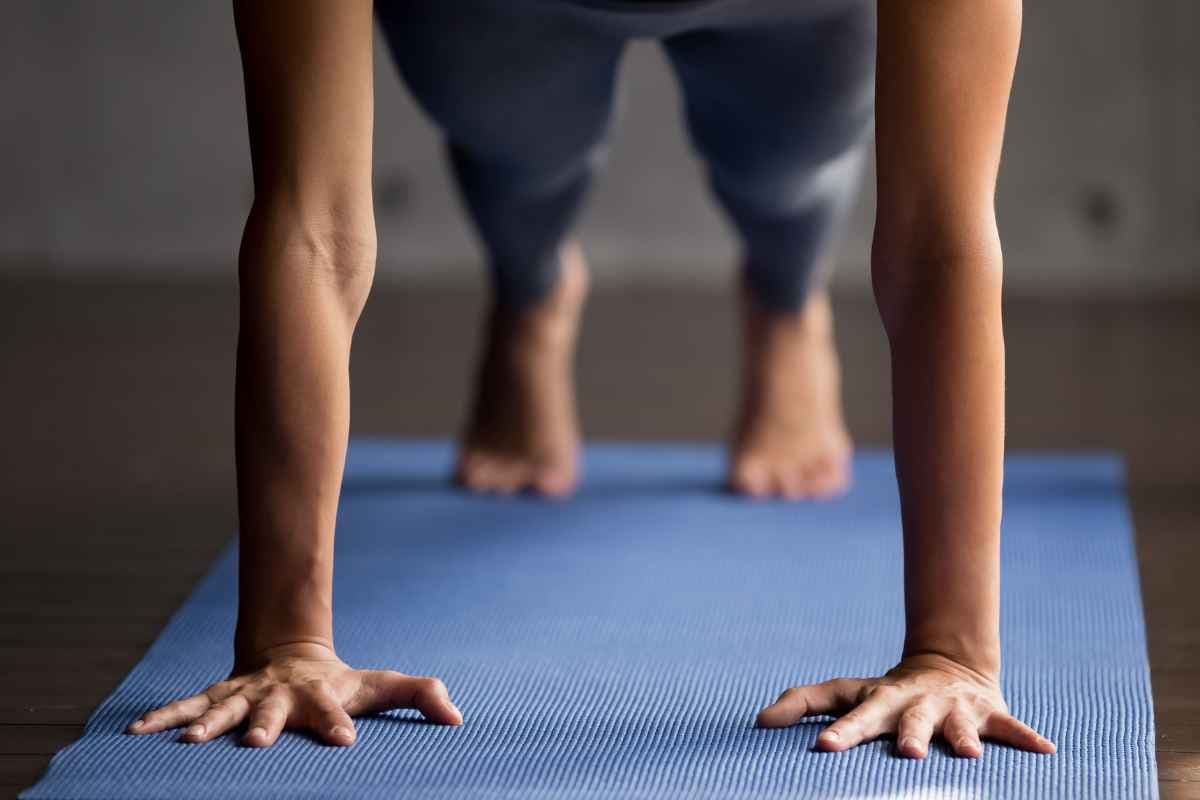
- Push pattern: wall press-ups, then worktop press-ups, then floor. The incline is your difficulty dial.
- Pull pattern: the awkward one without kit. A towel row around a sturdy door handle works; a cheap resistance band works better.
- Hinge pattern: glute bridges on the floor. Squeeze at the top, lower slowly.
Two rules carry the whole programme: stop each set feeling you had two or three more in you, and show up on the schedule even when you shorten the session. Consistency is the active ingredient.
How to progress
Progress means making the movement slightly harder once it stops being challenging: more reps, a slower lower, a steeper angle, one leg instead of two. The day 3×10 chair squats feel easy, that's not a finish line, it's the signal to find the next notch. Log your sessions like you log your food; "30 min strength" in your diary counts it toward your day.
The protein half of the deal
Training is the signal; protein is the building material, and it's exactly what a suppressed appetite crowds out first. Front-load it: if protein leads each meal, the medicine's small portions still deliver the graft. We've covered the practical side, including what's worth buying and what isn't, in protein powder on a GLP-1.
The scale can't see any of this, which is rather the point. Strength going up while weight goes down is the trend pair worth having. Track both free.
View sources (2)
- Prado et al., Muscle matters: the effects of medically induced weight loss on skeletal muscle. The Lancet Diabetes & Endocrinology, 2024
- Sardeli et al., Resistance training prevents muscle loss induced by caloric restriction in obese elderly individuals: a systematic review and meta-analysis. Nutrients, 2018