Healthcount Weekly · November 5, 2026
A 3-minute film on how you see yourself
A 3-minute Dove ad from 2013 shows women being harder on themselves than a stranger is.
This week in 30 seconds
- People likely notice you less, and like you more, than you think.
- Backed up? Drink enough, add fiber slowly and keep moving.
- Serious side effects: gallbladder problems have the clearest link. Know the signs.
Write how you feel in your free journal, in your own words →
How you feel
Two drawings of one woman
In a 2013 Dove ad, an artist draws women twice: from their own words, then a stranger's. Side by side, the drawings show how hard they've been on themselves.
I find it beautiful. It's also an ad, not a study, and it's still about looks. Nobody paid for this mention.
So it can't prove you look better than you think. But studies do find we think others notice us more, and like us less, than they do.
Everyone drawn in the film is a woman. The point isn't only for women.
Try this
One line for one part of your body
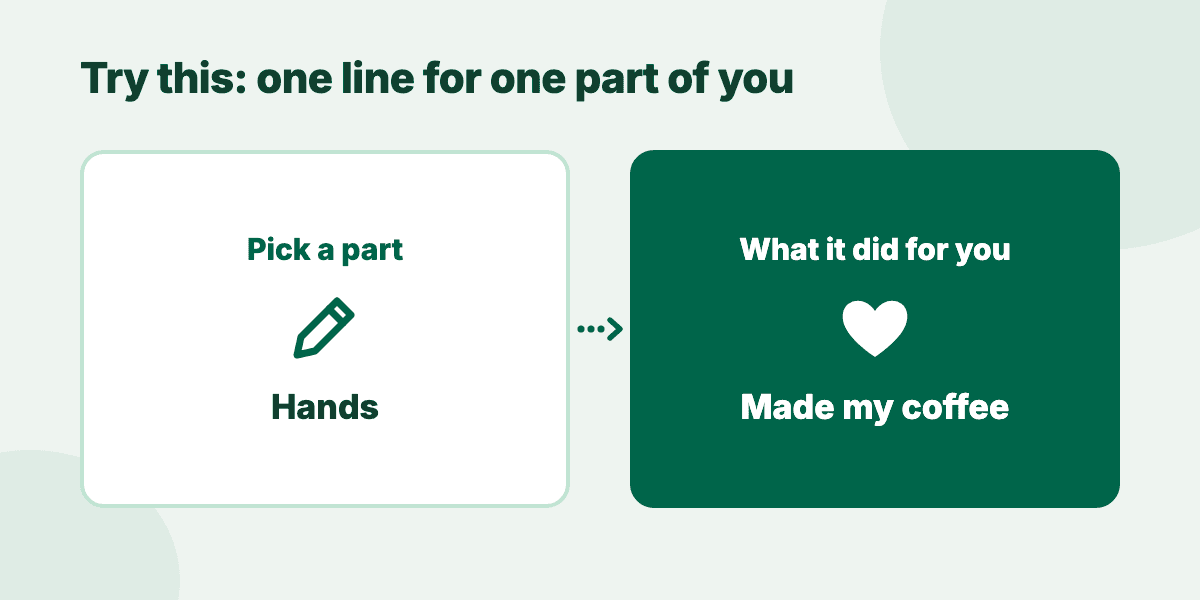
Pick a part of your body. Write one thing it did for you this week. No numbers or sizes, and no need to check a mirror.
This short version is untested, so treat it as an experiment. If it feels bad, stop.
In treatment for an eating disorder? Your team's plan comes first. If body thoughts fill over an hour a day, or change how you eat, talk to your doctor.
New to your medicine?
Backed up? What helps
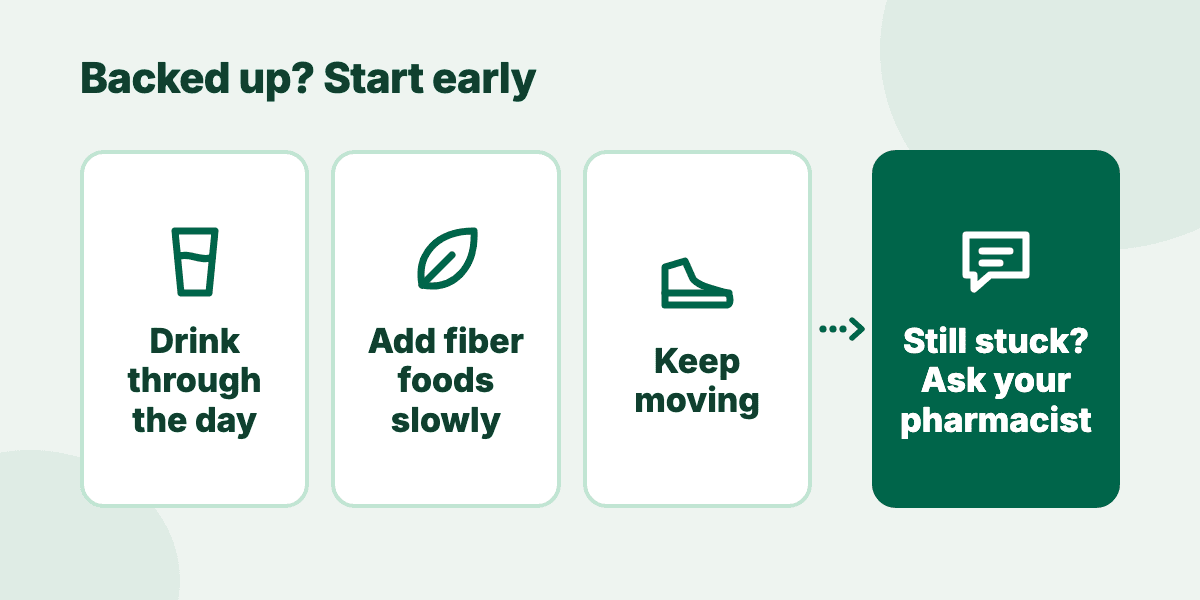
Constipation is common on these medicines. Side effects are more likely in your first weeks and after a dose goes up. A 2025 advisory from four US medical and nutrition groups says to get ahead of it.
1. Drink enough through the day.
2. Add fiber foods slowly, like prunes or other dried fruit. Queasy in your first few days? Wait a bit.
3. Keep moving. Regular activity may help.
Still stuck? Ask your pharmacist or prescriber what else you can try.
See a doctor right away if you also have blood in your stool, bleeding from your rectum, constant stomach pain or lower back pain. Same for vomiting, fever or not passing gas.
New research
A new review of serious side effects
One researcher's review, published October 9, looked at seven rare but serious side effects linked to these medicines.
Gallbladder problems had the most consistent evidence of cause and effect. For most others, it's still uncertain.
It says the added risk is usually small, but can matter more if you're already at high risk. Ask your prescriber.
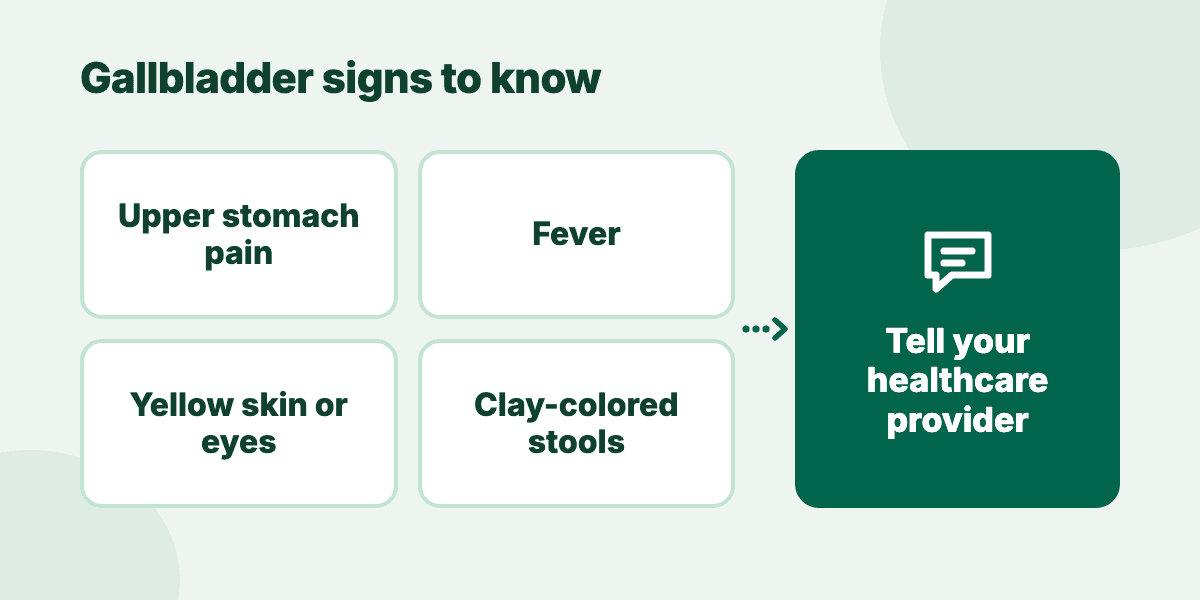
Gallbladder signs: pain in your upper stomach, fever, yellowing of your skin or eyes, or clay-colored stools. Tell your healthcare provider right away.
Severe stomach pain that won't go away, with or without nausea or vomiting? It can spread to your back. The labels say to stop your medicine and call your healthcare provider right away. It can be a sign of pancreatitis, an inflamed pancreas.
If it comes up
People keep commenting on my body. What do I say?
You don't owe anyone a conversation about your body or your medicine. "Thanks, I'm feeling well" is enough. Then change the subject.
Even kind comments can land hard. A 2009 survey asked 220 college women about comments on their looks, good and bad. The more those comments affected them, the more they watched their own bodies and the less happy they felt with them.
One survey can't prove cause. But if family meals are coming up, it may help to pick your line now.
That's it for this week. One quick question: which should I cover in a coming issue, eating out with a small appetite or keeping your strength up? Just reply with one or the other.
I read every reply. Please don't send medical details, though: I can't give medical advice.
Anna
View sources (12)
- Real Beauty Sketches, Dove campaign page, checked November 1, 2026
- Gilovich, Medvec and Savitsky, The spotlight effect in social judgment, Journal of Personality and Social Psychology, 2000
- Boothby and others, The liking gap in conversations, Psychological Science, 2018
- Obsessive-compulsive disorder and body dysmorphic disorder (CG31), NICE (UK), 2005, reviewed July 2024, recommendation 1.4.2.2
- Nutritional priorities to support GLP-1 therapy for obesity, joint advisory from four US medical and nutrition groups, 2025 (free full text)
- Treatment for constipation, NIDDK (US National Institutes of Health), last reviewed May 2018
- Symptoms and causes of constipation, NIDDK, last reviewed May 2018
- Ueda, GLP-1 receptor agonists and serious adverse events: evidence, uncertainty and clinical implications, Journal of Internal Medicine, online October 9, 2026 (lists all seven)
- FDA Medication Guide for one of these medicines, revised August 2026
- Symptoms and causes of gallstones, NIDDK, last reviewed November 2017
- GLP-1 medicines for weight loss and diabetes: what you need to know, MHRA (UK medicines regulator), updated February 5, 2026
- Calogero, Herbozo and Thompson, Complimentary weightism: the potential costs of appearance-related commentary for women's self-objectification, Psychology of Women Quarterly, 2009